The innate capacity to draw in pleasure-seekers and radicals in equal measure, fused with magnetic presence and bold menace, positioned 2Pac among the most compelling and commercially dominant rappers throughout the 1990s. Those same traits, together with a cadence widely copied yet never matched, cemented his status as a defining force in hip-hop long after his untimely death. Emerging first in 1991 as a supporting presence with Digital Underground, he featured on the ensemble’s Top Ten R&B/hip-hop single “Same Song,” and closed the year by establishing a reputation for outspoken intensity via his well-received solo debut 2Pacalypse Now. Early the following year a breakout turn in the crime thriller Juice marked the start of numerous prominent acting opportunities. Within just a few additional years he accumulated an array of diverse Top 20 pop singles—including “I Get Around,” “Keep Ya Head Up,” “Dear Mama,” and the chart-topping “California Love”—while simultaneously delivering a run of platinum albums: Strictly 4 My N.I.G.G.A.Z. (1993), Me Against the World (1995), and All Eyez on Me (1996). Despite the turbulent existence he led, his September 1996 murder still arrived as a profound shock. His stature expanded dramatically through more than half a dozen Top Ten posthumous projects, a 2017 induction into the Rock and Roll Hall of Fame, and the Emmy-nominated documentary miniseries Dear Mama (2023).
Born Tupac Amaru Shakur in New York City to two Black Panther parents, he entered the world after his father and mother had already parted ways; his activist mother Afeni subsequently relocated him and his sister across multiple states throughout much of their upbringing. The household often hovered near poverty, yet Shakur secured admission as a teenager to the esteemed Baltimore School of the Arts. There his artistic impulses thrived as he began crafting rhymes and exploring performance. Before graduation his family relocated to Marin City, California, when he was seventeen. Over the ensuing years he navigated street life and turned to hustling, eventually crossing paths with Shock-G of Digital Underground. The Oakland collective brought him aboard as a dancer and roadie; while traveling with the group he developed his own recordings. In January 1991 he made his recorded debut as 2Pac on “Same Song,” a number-seven R&B/hip-hop hit from the crew’s This Is an EP Release, and also appeared on their follow-up full-length Sons of the P, released that October. One month later Interscope issued his solo debut 2Pacalypse Now, which reached number 63 on the Billboard 200 and later achieved gold certification on the strength of “Brenda’s Got a Baby,” a single that climbed to number 23 on the R&B/hip-hop chart. Additional visibility arrived when Vice-President Dan Quayle publicly denounced the content of “Soulja’s Story” during his re-election campaign.
His profile rose sharply after an acclaimed performance in Ernest Dickerson’s Juice, which secured a leading role in John Singleton’s Poetic Justice the next year. By the time that film reached theaters, 2Pac had delivered his second album, Strictly 4 My N.I.G.G.A.Z., a platinum-certified set that peaked at number four on the R&B/hip-hop chart (number 24 on the Billboard 200) and yielded the Top Ten R&B/hip-hop singles “I Get Around” and “Keep Ya Head Up,” which reached numbers 11 and 12, respectively, on the Hot 100. Late in 1993 he appeared in the basketball drama Above the Rim.
Even as 2Pac moved units and garnered acclaim for both music and screen work, serious legal troubles mounted. He confronted multiple criminal and civil proceedings and, in 1994, was convicted of sexual assault. The day before sentencing he was robbed, beaten, and shot by three assailants in the lobby of a New York City recording studio. In February 1995 he received an 18-month to four-and-a-half-year prison term and began serving shortly thereafter. While incarcerated he saw the release of his third album, Me Against the World, in March; the project debuted at number one on the Billboard 200, making 2Pac the first artist to achieve that feat while imprisoned. From behind bars he alleged that the Notorious B.I.G., Puffy Combs, Andre Harrell, and his close associate Randy “Stretch” Walker had arranged the New York shooting. He ultimately served only eight months after Death Row Records president Suge Knight secured parole and posted bond. By year’s end 2Pac was free and recording his first project for Death Row, while also earning his initial two Grammy nominations: Me Against the World for Best Rap Album and the ballad “Dear Mama,” a number-nine pop hit, for Best Rap Solo Performance.
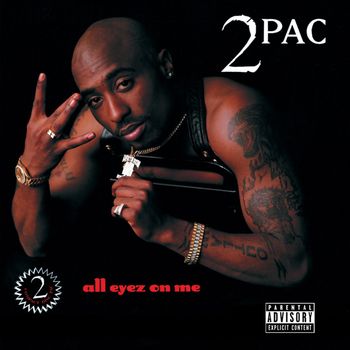
His Death Row debut, All Eyez on Me, became the first double-disc of original hip-hop material; upon its February 1996 arrival it entered the Billboard 200 at number one and earned quintuple-platinum certification by autumn. Despite another chart-topping album, the number-one pop single “California Love” (a Dr. Dre collaboration), and three further Grammy nominations, 2Pac grew weary of hip-hop and redirected focus toward acting. During summer 1996 he completed two films—the thriller Bullet and the dark comedy Gridlock’d, which also starred Tim Roth—while continuing to record for Death Row, a label then unraveling without Dre as primary producer and amid Knight’s deepening legal entanglements.
At the moment of his September 1996 murder, signs suggested 2Pac contemplated departing both Death Row and possibly rap itself; none of those speculations could be verified, just as the precise motives behind the shooting remain unresolved. After an altercation inside the MGM Grand Las Vegas lobby, he sustained four gunshot wounds while riding in Knight’s sedan, was admitted to the University Medical Center of Southern Nevada, and succumbed six days later on September 13.
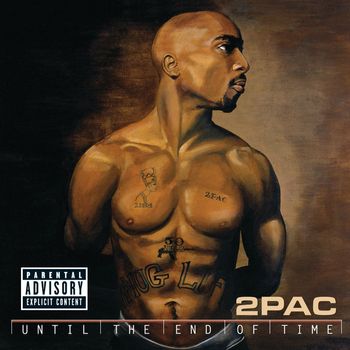
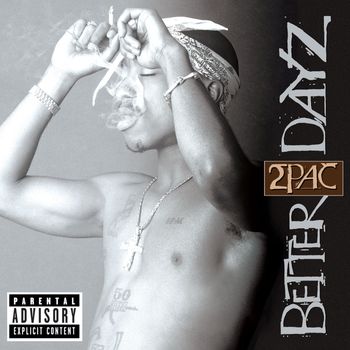
Hundreds of mourners gathered at the hospital upon news of his passing, and the broader entertainment community expressed collective grief. Although the investigation produced no immediate leads, many hoped the tragedy would conclude the heavily publicized East Coast/West Coast hip-hop conflict. Tragically, six months after 2Pac’s death the Notorious B.I.G. was killed under comparable circumstances. In the aftermath of 2Pac’s murder his visibility surged, accompanied by a succession of Top Ten posthumous releases. Early entries included Don Killuminati: The 7 Day Theory (issued under the Makaveli alias in 1996), R U Still Down? (Remember Me) (1997), Still I Rise (1999), and the Top 40, Grammy-nominated single “Changes.” Subsequent albums—Until the End of Time (2001), Better Dayz (2002), Loyal to the Game (2004), and Pac’s Life (2006)—appeared over the following decade.
Further testament to 2Pac’s enduring resonance lies in more than a dozen documentaries, among them the Academy Award-nominated Tupac: Resurrection and the Emmy-nominated Dear Mama. The latter, a miniseries directed by Allen Hughes, examined the lives of both 2Pac and Afeni Shakur. He has also been the focus of the Grammy Museum exhibition All Eyez on Me: The Writings of Tupac Shakur and the Los Angeles exhibition Tupac Shakur. Wake Me When I’m Free. In 2017, amid these tributes, 2Pac became the first solo rapper inducted into the Rock & Roll Hall of Fame, with Snoop Dogg delivering the induction speech. Not until 2023 did an indictment and arrest occur in connection with the murder.