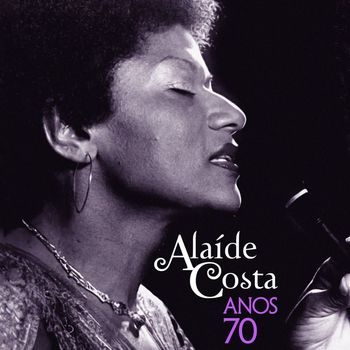
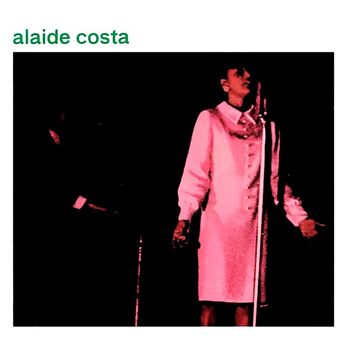
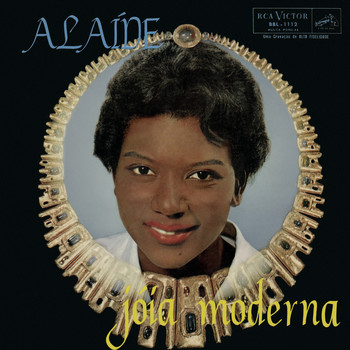
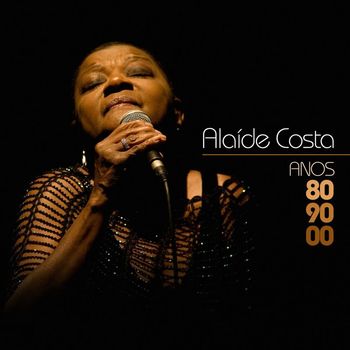
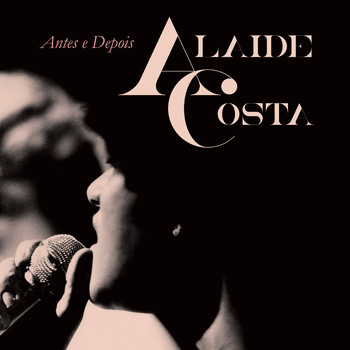
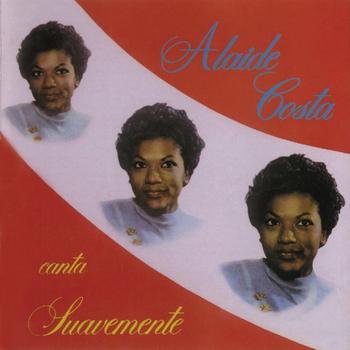
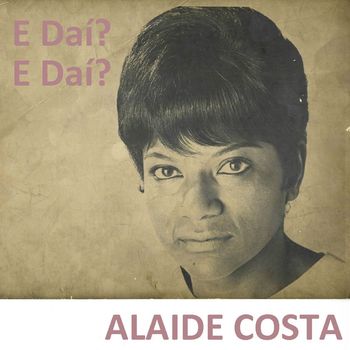
Throughout the 1960s Alaíde Costa rose to prominence as a vocalist whose steadfast loyalty to a refined manner ideally matched to the introspective Brazilian form known as modinha led mainstream cultural forces to sideline her, leaving her largely overlooked by wide audiences until she resurfaced on Milton Nascimento’s Clube da Esquina. Although her subsequent performances and recordings occurred only sporadically, they consistently maintained an elevated standard through her richly nuanced interpretations. As a songwriter she supplied both music and lyrics to Afinal while forming partnerships with such key figures as Vinícius de Moraes and Geraldo Vandré.
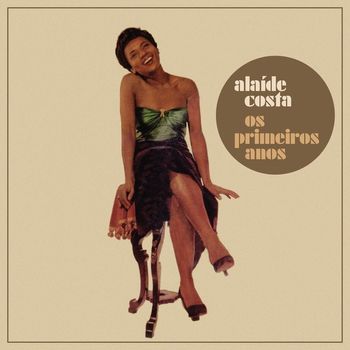
Her vocal journey began on juvenile radio programs; at thirteen she captured first prize in a contest for young singers conducted by Paulo Gracindo on his Seqüência G3 broadcast over Radio Tupi RJ. The following year she appeared on Renato Murce’s Arraia Miúda program at the prestigious Radio Nacional. Beginning in 1952 she took part in the novice showcases A Hora do Pato and Pescando Estrelas, the latter hosted by Ary Barroso on Rádio Clube do Brasil. Her earliest live appearances occurred at the Dancing Avenida, a well-known gafieira where an important strand of Brazilian popular music was taking shape and where the careers of singers such as Ângela Maria and Elizeth Cardoso had likewise originated. Soon afterward she secured a contract with Rádio Clube; in 1957 she cut her debut 78 rpm, Tarde Demais, earning the Revelation of the Year accolade. That same year she issued a second 78 rpm containing “Conselhos” and “Domingo de Amor” on the Odeon label.
João Gilberto, having heard her, sought to draw her into the emerging bossa nova movement and succeeded in placing the bossas “Chora tua Tristeza,” “Sem Você,” “Estrada Branca,” “Lobo Bobo,” and “Minha Saudade” on her first album, Alaíde Canta Suavemente, which she recorded for RCA after switching labels in 1958. While performing regularly in Rio she gained significant exposure at the 1960 Festival Nacional da Bossa Nova in São Paulo, an achievement that led to her appointment as co-host, alongside Geraldo Vandré and Carlos Lyra, of a TV Tupi program. Two years later she married and relocated to São Paulo, where her status was cemented in 1964 by her appearance on the landmark show O Fino da Bossa at the Teatro Paramount. Her rendering of “Onde Está Você” (Oscar Castro-Neves/Luverci Fiorini) proved so compelling that it secured her a two-year contract with TV Record.
At the height of her visibility she headlined a season at Rio’s Santa Rosa Theater, joined the I Festival Universitário on TV Tupi, and presented Renaissance songs in the production Alaíde alaúde at São Paulo’s stately Teatro Municipal under conductor Diogo Pacheco. By 1966, however, hearing difficulties combined with diminished interest in her delicate approach prompted a slowdown in her activities. She resurfaced only to contribute to Milton Nascimento’s Clube da Esquina album; the track “Me Deixa em Paz” became a hit that boosted sales, and she joined Nascimento for performances at Rio’s Teatro Teresa Raquel and Sala Cecília Meireles. In 1972 she resumed recording with two singles, followed the next year by the album Alaíde Costa & Oscar Castro-Neves. Additional singles appeared in 1974 and 1975, and in 1976 she released the LP Coração on Odeon. Working independently, she issued Águas Vivas in 1982 and, in 1988, Amiga de Verdade, which featured guest appearances by Milton Nascimento and Paulinho da Viola.
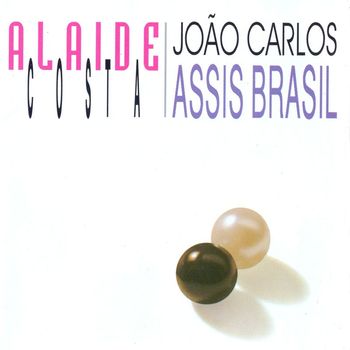
National-profile concerts followed in 1991 with Coração Violão, shared with Paulinho Nogueira, and Alaíde Costa canta Tom Jobim. In 1994 she performed with classical pianist João Carlos Assis Brasil in a live concert later issued by Movieplay; the subsequent year the pair recorded Alaíde Costa e João Carlos Assis Brasil for WEA, with releases in both Brazil and France. She participated in São Paulo’s Rumos Musicais project in 1997, and BMG later reissued a compilation drawn from her first three albums.