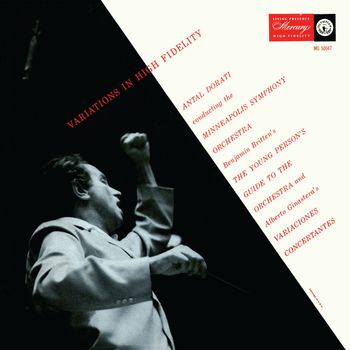
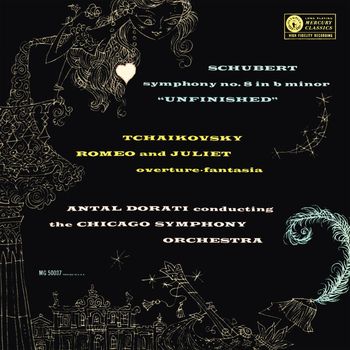
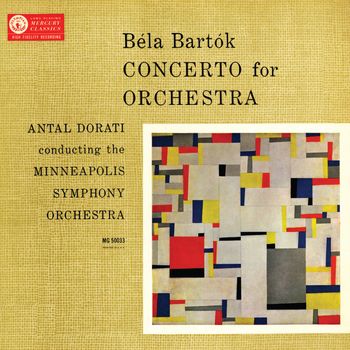
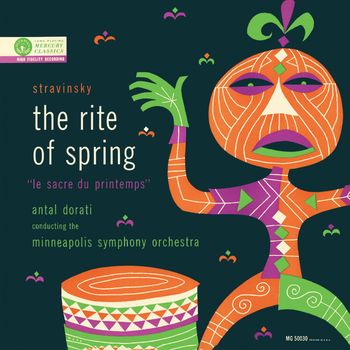
Although chiefly recognized for his podium work, the eminent Hungarian Antal Dorati belonged to a family of musicians and began formal training at five, taking up the cello shortly afterward and receiving composition lessons from age twelve, even though he had already produced several pieces, three of them operas with his own libretti, all of which he later dismissed as immature.
His earliest composition teacher, Leo Weiner (1885-1960), shaped Dorati’s musical outlook and performance habits decisively. After a single year with Weiner, Dorati became the pupil of Zoltan Kodaly (1882-1967) and remained so until the close of his schooling.
At eighteen Dorati joined the Budapest Opera House, first as a rehearsal coach, next as conductor of opera and ballet productions, and ultimately as a leading symphonic conductor. The demands of concert life suspended his composing for roughly twenty years, yet by the mid-1950s fresh creative momentum had returned, allowing him to complete one substantial score annually for many years.
Five years of preparation preceded the Concerto for Piano and Orchestra, which was composed in the summer of 1974 for Dorati’s wife, Ilse Von Alpenheim, herself from a musically prominent family. She introduced the richly tonal score, centered on D, at the Kennedy Center in the autumn of 1975. Dorati offers no apology for his adherence to tonality and, like fellow tonalists, writes almost defensively of the style in an age he regards as given over to atonality or worse. The work follows a direct three-movement plan. Its opening movement adopts sonata form, presenting three thematic groups that are variously reordered before a recapitulation and cadenza close the section. The slow movement offers quiet variations on its central theme, then introduces a jagged dramatic episode possessing its own development before restoring the opening material above muffled drums. The brisk finale unfolds as a complex rondo whose main subject returns intermittently, incorporates a relaxed trio section, pauses for a suspended, introspective recollection of ideas from all three movements, and ends in a stormy stretto.
Ilse Von Alpenheim recorded the Concerto in April 1976 in the Kennedy Center concert hall; the performance appeared on a Vox/Turnabout LP the following August. The same album contained her reading of Dorati’s Variations on a Theme of Bartok, a demanding piece derived from the “Peasant Song” (No. 15) of Bartok’s Mikrokosmos.
Dorati’s Symphony No. 1 (1972) and Symphony No. 2 (1988) appear on a BIS compact disc together with two works for choir and orchestra, Jesus oder Barabbas? and Pater Noster, written respectively the year before and the year of his death.




























![Ravel: Daphnis et Chloé (The Mercury Masters: The Mono Recordingsblank])](https://artwork-cdn.7static.com/static/img/sleeveart/00/000/000/0030084585_350.jpg)