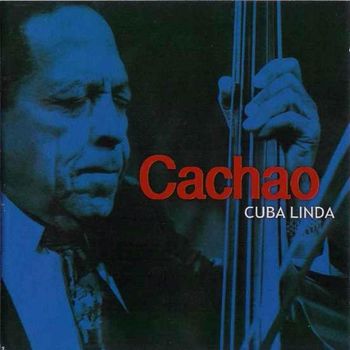
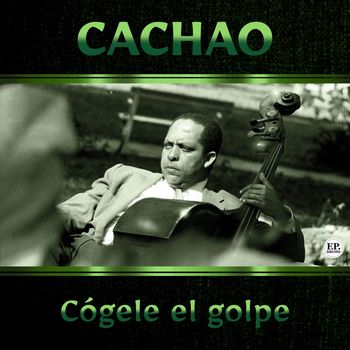
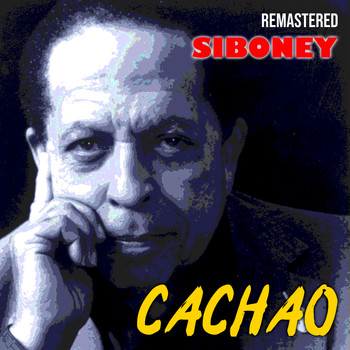
Born on 14 September 1918 in Havana, Cuba, and passing away on 22 March 2008 in Coral Gables, Florida, the celebrated bassist Cachao—also an arranger, composer, and multi-instrumentalist on piano, tres, bongo, trumpet, and trombone—stood at the heart of mambo’s emergence while becoming virtually interchangeable with the descarga style. Pianist and bandleader Charlie Palmieri characterized the latter as having “... no music written. It’s a soloists freedom of expression, ad-libs, an improvisation of the melody... whatever he (she) feels at the moment...” (quoted by Latin music historian Max Salazar). In 1991 leading Cuban bandleader Bebo Valdés observed: “... if Cachao and Arsenio Rodríguez had not been born, the Cuban music of the 50s and perhaps the last 30 years, would have sounded like the music of the 30s.”
Raised in a household steeped in music, López began guitar lessons at age six. Around eight he performed on guitar and bongo alongside Conjunto Miguel De Seste, then joined Ignacio Villa—later known as Bola De Nieve—whose ensemble supplied live accompaniment for silent films at a Guanabacoa cinema in Havana. In 1931 he entered the Havana Symphonic Orchestra, remaining for more than three decades. Concurrently he played in violinist Marcelino González’s dance orchestra, where his dynamic bass lines earned the nickname “Cachao,” taken from “cachandeo,” denoting lively exuberance. From 1934 to 1936 he worked successively with Ernesto Muñoz, Antonio Maria Cruz, and Orquesta Antillana.
In 1937 López entered La Maravilla Del Siglo, the flute-strings-and-rhythm ensemble fronted by vocalist Fernando Collazo. The next year the musicians rebelled against Collazo and reorganized as a cooperative under Antonio Arcaño Betancourt, becoming Arcaño Y Sus Maravillas. Core members besides Cachao and Arcaño included his brother Orestes López (born 29 August 1908 in Havana; cello, bass, piano), violinist Enrique Jorrín (born 1926 in Cuba, died 1988 in Cuba; later with Orquesta América, creator of the cha cha chá, and eventual bandleader), violinist Félix Reina (subsequently with Orquesta América, José Fajardo, and as leader of Estrellas Cubanas), violinist Elizardo Aroche, pianist Jesús López, timbalero Ulpiano Díaz, and güiro player Oscar Pelegrin. Like other flute-and-strings groups of the period, the orchestra specialized in the danzón, a Cuban ballroom form tracing back to the seventeenth- and eighteenth-century French contradanza.
Amid ongoing disputes over mambo’s authorship, Orestes López’s 1938 danzón titled “Mambo,” first aired on radio station Mil Diez, ranks among the earliest documented instances of the rhythm. Speaking to Erena Hernández in 1979, Orestes remarked: “... I must give Arcaño credit in the development of my mambo. When I played it for him, he blew flute montunos (improvisations) I had never heard before. His floreos (ad-libs) are what enhanced my mambo.” Other principal claimants to the innovation include Pérez Prado and Arsenio Rodríguez. Cachao clarified his stance to Max Salazar: “Prado’s mambo is different to my brother’s mambo... he’s deserved all the fame and wealth with his new sound... we Cubans are proud of him... Arcaño y sus Maravillas were the first to play the mambo... we played it before Arsenio’s diablo (his initial name for the rhythm) and we did it over the radio.”
The fresh danzón-mambo approach spread slowly. Following Arsenio’s lead in adding conga to a trumpet-led conjunto, Arcaño enlisted conguero Eliseo El Colorao in 1939. By 1943 Arcaño’s orchestra stood on equal footing with Arsenio’s as Cuba’s premier ensemble. Yet the relentless pace exacted a toll; Cachao later recalled, “In 1943, I couldn’t take the pressure of arranging music, playing every day, and being on the move all day long. I was on the verge of a nervous breakdown” (from “El Gran Cachao,” 1991). A respite in Miami preceded his return to the demanding schedule. Another stress-induced depression struck in 1948; despite further breaks—including time in New York and a stint with an American ice follies orchestra back in Cuba—he parted from Arcaño amicably in 1949. Subsequent engagements included work with Mariano Mercerón and José Fajardo, the latter taking him to New York’s Palladium Ballroom in 1954.
The first Latin jam sessions, or descargas, appeared on New York recordings in the 1940s. The earliest known descarga captured in Cuba is thought to be Bebo Valdés and members of the Tropicana orchestra—billed as the Andres All Stars—performing “Con Coco Poco” in 1952; it later appeared on the 10-inch Panart album Cubano. In 1956 Panart staged a well-publicized “party” to lure top Cuban players to a jam for modest pay, assuring them the tapes were private; the label soon issued Cuban Jam Session, Vol. 1. Its immediate sequel followed, both credited to Julio Gutiérrez as director, though the precise extent of his role later drew conjecture. Niño Rivera directed volume three. Cachao assembled musicians in 1957 for the Panart release Cuban Jam Sessions In Miniature: “Descargas,” which sold well beyond a million copies, attained classic status, and cemented his reputation. He continued with Jam Sessions With Feeling on Maype and Cuban Music In Jam Session on Bonita. José Fajardo And His All-Stars supplied the final Panart installment.
Late in the decade Cachao reconvened the former Arcaño Y Sus Maravillas personnel for two Kubaney albums of danzones. He contributed to Chico O’Farill’s Cuban All Stars sides “Descarga Numero Uno” and “Descarga Numero Dos” for Gema, later anthologized on Los Mejores Musicas De Cuba (reissued by Palladium Records in 1988). He also played bass on Walfredo de los Reyes’s Cuban Jazz, also known as Sabor Cubano, issued on Gema and reissued by Palladium in 1988; pianist Paquito Echavarría appeared as well. The Panart sessions prompted New York’s Alegre All-Stars to launch their own Latin jam series in 1961, followed by descarga albums from Kako, Johnny Pacheco, percussionist Osvaldo “Chi Hua Hua” Martínez, Tico All-Stars, Cesta All-Stars, Salsa All-Stars, Fania All Stars, and SAR All Stars.
Cachao settled in New York in 1963 and initially struggled to find work. Charlie Palmieri arranged for his regular bassist to step aside temporarily so Cachao could earn income. Engagements with Johnny Pacheco, Tito Rodríguez, Candido, Eddie Palmieri, Julio Gutiérrez, Lou Pérez, George Hernández, and Pupi Campo (the last two in Las Vegas) preceded his move to Miami. Rodríguez honored him with the track “Descarga Cachao” on the 1964 album Tito Tito Tito. In 1965 Cachao joined the Alegre All-Stars; producer Al Santiago noted, “... we decided to do a tribute to Noro Morales and we called it the Kako After Hours Orchestra; picking up the musicians at five in the morning after everyone was done with their regular gigs. We had Cachao there, and Bobby Rodríguez, one played one side of the record and one played the other!...” (1990 interview with Nancy Rodríguez). He recorded with the Tico All-Stars at the Village Gate in 1966 and again at Carnegie Hall in 1974. On the 1968 Salsa All-Stars album, also produced by Al Santiago, he again shared bass duties with Bobby Rodríguez.
He performed at the notable March 1977 Lo Dice Todo concert at Avery Fisher Hall. Several participants—Charlie Palmieri; flutist Don Gonzalo Fernández; violinists Felix “Pupi” Legarreta, Alfredo De La Fé, and Eddie Drennon; and percussionists Chi Hua Hua and Rolando Valdés—joined Cachao on the Salsoul albums Cachao Y Su Descarga ’77, Vol. 1 and Dos. In 1981 he collaborated with Walfredo De Los Reyes, Paquito Echavarría, and percussionist Tany Gil on the Latin-jam album Walpataca for Miami’s Tania Records. He led another descarga ensemble for the 1986 Tania release Maestro De Maestros: Israel López “Cachao” Y Su Descarga ’86, featuring José Fajardo, de los Reyes, and Echavarría. In November 1987 he returned to New York for a Hunter College Auditorium tribute that included Tito Puente, Charlie Palmieri, Pupi, José Fajardo, Alfredo “Chocolate” Armenteros, violinist/saxophonist José “Chombo” Silva, trombonist Barry Rogers, and additional guests.
While based in New York and Miami, Cachao recorded with Carlos “Patato” Valdez and Eugenio Arango “Totico,” Candido, Hubert Laws, Eddie Palmieri, Mongo Santamaría, Lou Pérez, Pedro Rafael Chaparro, Héctor Rivera, Charlie Palmieri, Chano Montes, Pepe Mora, Hernán Gutiérrez, Ñico Rojas, La India De Oriente, Roberto Torres, Hansel And Raúl, and Grupo Niche, and also performed with the Miami Symphony Orchestra.
In the 1990s actor-musician Andy Garcia elevated Cachao’s visibility by directing the 1994 documentary Cachao... Like His Rhythm There Is No Other and by producing and performing on the Grammy-winning Master Sessions series. Cachao earned additional Grammy Awards for both solo projects and contributions to other recordings, the final one arriving in 2005 for ¡Ahora Si!. He succumbed to complications from kidney failure on 22 March 2008 in Coral Gables, Florida.