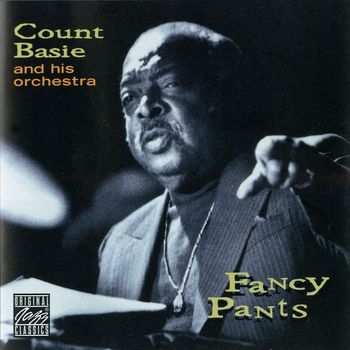
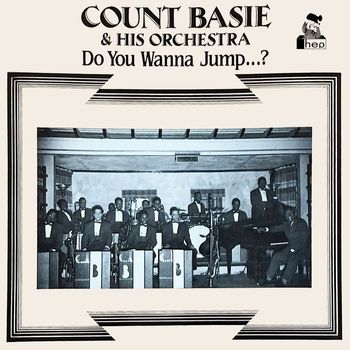
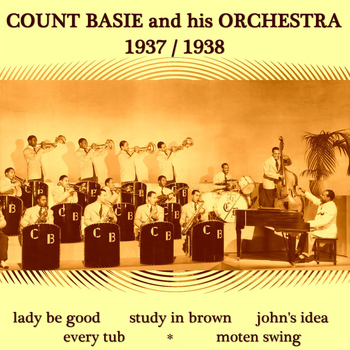
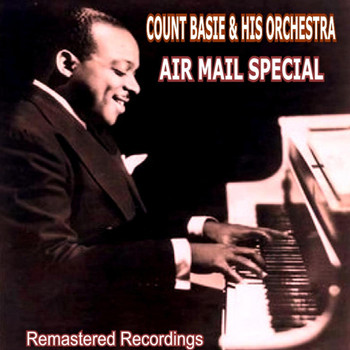
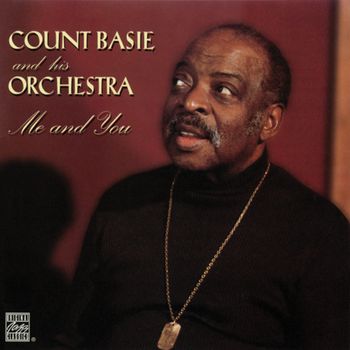
During the swing period, Count Basie ranked as one of its pivotal bandleaders. Except for a short interval early in the 1950s, his leadership of a large ensemble spanned from 1935 right up to his passing nearly five decades afterward, after which the group kept playing. From his piano seat, Basie directed an orchestra known for its buoyant, swinging rhythm section along with dynamic group playing and ample opportunities for individual improvisation. Unlike Duke Ellington, Basie did not focus on composing, nor did he stand out as a prominent performer in the manner of Benny Goodman. Instead, the band itself served as his primary means of expression, earning recognition as the quintessential embodiment of swing while exerting wide influence across jazz.
Both of his parents pursued music: Harvie Basie performed on mellophone while Lillian (Childs) Basie played piano and provided her son with his first instruction. Additional guidance came from stride pianists active in Harlem, especially Fats Waller. Basie began earning a living by accompanying vaudeville acts; a troupe he joined disbanded in Kansas City during 1927 and left him without resources there. He remained in that Midwestern hub, initially taking a job at a silent-film theater before entering Walter Page’s Blue Devils in July 1928, where Jimmy Rushing handled vocals. Early in 1929 Basie departed to work with other ensembles and eventually joined Bennie Moten’s organization. Following Moten’s death on April 2, 1935, Basie performed as a soloist and then assumed direction of a nine-piece group first known as the Barons of Rhythm. Several former Moten musicians joined, including Walter Page on bass, Freddie Green on guitar, Jo Jones on drums, and Lester Young on tenor saxophone, with Jimmy Rushing returning as vocalist. The unit secured steady work at Kansas City’s Reno Club and began radio broadcasts that prompted an announcer to bestow the title “Count” on the pianist.
A decisive opportunity arose when John Hammond, working as both journalist and record producer, encountered one of those broadcasts and began promoting Basie to booking agents and record labels. Consequently the ensemble departed Kansas City in autumn 1936 for an engagement at Chicago’s Grand Terrace, followed by a Buffalo, NY, appearance and then a December booking at New York City’s Roseland. Its first recordings appeared on Decca Records in January 1937. After roster expansion and personnel shifts, the band revisited Chicago and later performed at Boston’s Ritz Carlton Hotel. During this stretch its recording of “One O’Clock Jump” entered the charts in September 1937; the piece became the orchestra’s signature theme and later received induction into the Grammy Hall of Fame.
An extended 1938 residency at New York’s intimate Famous Door club solidified the group’s commercial standing. With Rushing on vocals, “Stop Beatin’ Round the Mulberry Bush” reached the Top Ten in autumn 1938. Basie spent the first half of 1939 in Chicago, switched from Decca to Columbia Records, and traveled to the West Coast that fall. Extensive touring occupied the early 1940s, yet after U.S. entry into World War II in December 1941 and the recording ban that began in August 1942, travel became limited. While on the West Coast the band appeared in five motion pictures released within months during 1943: Hit Parade of 1943, Reveille with Beverly, Stage Door Canteen, Top Man, and Crazy House. A string of Top Ten successes on both pop and R&B charts followed, among them “I Didn’t Know About You” (pop, winter 1945), “Red Bank Blues” (R&B, winter 1945), “Rusty Dusty Blues” (R&B, spring 1945), “Jimmy’s Blues” (pop and R&B, summer/fall 1945), and “Blue Skies” (pop, summer 1946). After moving to RCA Victor Records, Basie achieved a number-one single in February 1947 with “Open the Door, Richard!,” then scored three additional Top Ten pop hits that year: “Free Eats,” “One O’Clock Boogie,” and “I Ain’t Mad at You (You Ain’t Mad at Me).”
The broader decline of big bands in the late 1940s affected Basie equally, prompting him to disband the orchestra at decade’s end and lead smaller groups for the next few years. He reconstituted the large ensemble in 1952 once touring prospects improved. An initial European excursion reached Scandinavia in 1954, after which international travel formed a substantial part of his itinerary. Joe Williams joined as vocalist in late 1954. Commercial resurgence arrived with the 1955 Clef Records album Count Basie Swings – Joe Williams Sings, driven especially by the single “Every Day (I Have the Blues),” which climbed to the R&B Top Five and later entered the Grammy Hall of Fame. Another landmark track, the instrumental “April in Paris,” reached the pop Top 40 and R&B Top Ten in early 1956 and likewise gained Grammy Hall of Fame status. Albert Murray, co-author of Basie’s autobiography Good Morning Blues, termed this lineup the “new testament” edition of the band. Williams remained until 1960, yet the orchestra continued to thrive afterward.
At the inaugural Grammy Awards, Basie captured the 1958 prizes for Best Performance by a Dance Band and Best Jazz Performance, Group, for the Roulette Records LP Basie. Breakfast Dance and Barbecue earned a dance-band nomination for 1959, while Dance with Basie won the category in 1960; that same year The Count Basie Story received nominations for Best Performance by an Orchestra and Best Jazz Performance, Large Group. Further nods arrived for Basie at Birdland in 1961 and The Legend in 1962. Commercial impact remained modest, however, leading Basie to sign with Frank Sinatra’s Reprise Records in 1962 in pursuit of greater sales. Sinatra-Basie reached the Top Five in early 1963. Its successor, This Time by Basie! Hits of the 50’s and 60’s, entered the Top 20 and secured the 1963 Grammy for Best Performance by an Orchestra for Dancing.
The ensuing years, extending through the remainder of the 1960s, saw Basie collaborate with various vocalists on chart-oriented albums, a phase often criticized by jazz enthusiasts. Those projects included Ella and Basie! with Ella Fitzgerald (1963), the Top 20 release It Might as Well Be Swing with Sinatra again (1964), Our Shining Hour with Sammy Davis, Jr. (1965), The Board of Directors with the Mills Brothers (1968), and Manufacturers of Soul with Jackie Wilson (1968). An album of Broadway material, Broadway Basie’s … Way, also charted in 1966.
By the close of the decade Basie had returned to a more jazz-centered approach. Standing Ovation earned a 1969 Grammy nomination for Best Instrumental Jazz Performance by a Large Group or Soloist with Large Group (Eight or More). In 1970, with Oliver Nelson serving as arranger and conductor, he recorded the experimental Afrique, which drew a 1971 nomination for Best Jazz Performance by a Big Band. Festival and cruise-ship engagements dominated the band’s schedule thereafter. After several brief label associations in the early 1970s, Basie settled with Pablo Records for the remainder of his career. Pablo documented the orchestra across numerous settings, yielding well-regarded releases: Basie Jam received a 1975 nomination for Best Jazz Performance by a Group; Basie and Zoot earned the same-category nomination in 1976 and won for Best Jazz Performance by a Soloist; Prime Time captured the 1977 award for Best Jazz Performance by a Big Band; and The Gifted Ones with Dizzy Gillespie was nominated in 1979 for Best Jazz Instrumental Performance by a Group. Subsequent entries competed in the Best Jazz Instrumental Performance by a Big Band category, securing victories in 1980 for On the Road and in 1982 for Warm Breeze, a nomination for Farmer’s Market Barbecue in 1983, and a final win—Basie’s ninth career Grammy—in 1984 for 88 Basie Street.
Health issues mounted during Basie’s final eight years. A 1976 heart attack sidelined him for several months. Hospitalization recurred in 1981; upon resuming performances he navigated the stage in an electric wheelchair. He succumbed to cancer at age 79.
Musicians and audiences alike held Basie in high regard, and he maintained remarkable steadiness across a bandleading tenure that extended long after swing had become a historical style. Following his death the orchestra remained one of the more active ghost bands, directed successively by Thad Jones, Frank Foster, and Grover Mitchell. His extensive career produced a substantial discography encompassing every major label and numerous smaller ones as well.