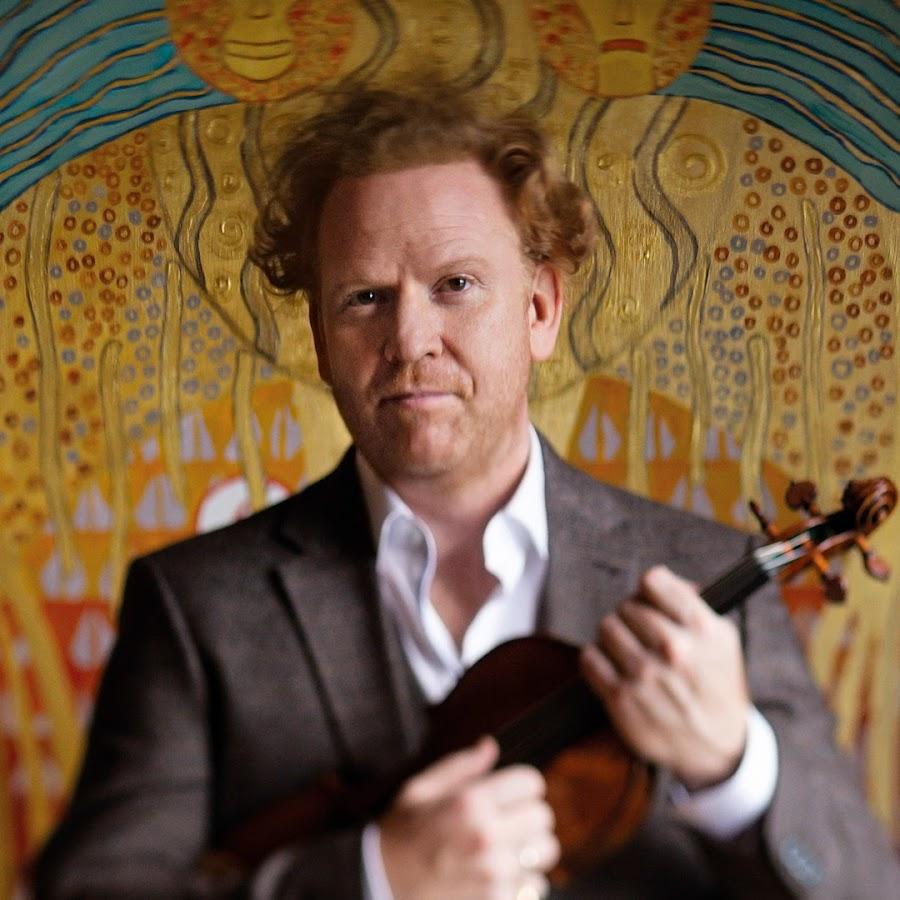
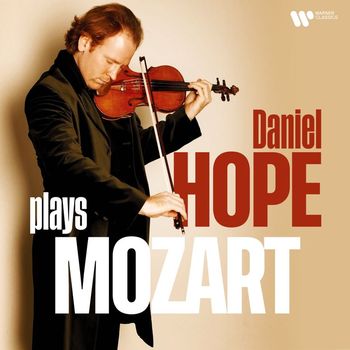
Publicity materials once branded him “the British violinist,” as though no others existed, yet Daniel Hope ranks among the most versatile British violinists to emerge in the first decades of the twenty-first century. A committed champion of new music, he has also joined the period-instrument group Concerto Köln for performances of Beethoven and Schumann, explored repertoire shaped by Indian classical artist Ravi Shankar, collaborated with actor Klaus Maria Brandauer on programs that intertwine spoken text with music, and produced two well-received recordings that treat Antonio Vivaldi’s familiar scores as launch points for fresh invention. In 2024 he issued the album Irish Roots, blending classical and folk pieces tied to Ireland and acknowledging his personal Irish lineage.
Born in Durban, South Africa, on August 17, 1973, he should not be mistaken for the American composer of the same name born in 1972 in Baltimore, Maryland. His father, poet and novelist Christopher Hope, endured political persecution in South Africa for his anti-government stance, prompting the family to relocate to England when Daniel was six months old. His mother, Eleanor, took a post as secretary to Yehudi Menuhin; young Daniel became a playmate of Menuhin’s grandchildren. Although the elder violinist played no central role in the boy’s upbringing, he nevertheless sparked Daniel’s interest in the instrument, which he began studying under the guidance of neighbor Sheila Nelson, one of England’s foremost teachers for young players. Hope later worked with several Russian pedagogues at the Royal College of Music before moving to Hamburg for lessons from 1992 to 1998 with Zakhar Bron; he also earned diplomas from the Royal Academy of Music in London. While a student in Hamburg he formed a close association with composer Alfred Schnittke—in 2003 he gave the premiere of the composer’s previously unknown 1955 violin sonata—and has remained a frequent interpreter of Schnittke and other living creators. Among the composers from whom he has commissioned pieces are Jan Müller-Wieland, Huw Watkins, and Roxanna Panufnik. His first commercial recording, the 1999 Nimbus release Daniel Hope Plays Schnittke, Takemitsu, Weill, appeared during this formative period.
In 2002 he was asked at seven days’ notice to substitute on tour with the Beaux Arts Trio. He soon became a full member and enriched the ensemble’s traditionally conservative programs by commissioning new scores from György Kurtág and Mark-Anthony Turnage for the group’s fiftieth anniversary. After the trio disbanded in 2008, Hope sustained an active chamber-music schedule both on stage and in the studio. Three major awards recognized his 2004 recording of the Berg Violin Concerto—in its original version—paired with the Britten concerto; readers of the British monthly Gramophone further named it the finest available account of the Berg. He has served as associate artistic director of the Savannah Music Festival in Georgia and, since 2010, as Artistic Partner of Festspiele Mecklenburg-Vorpommern, where he scheduled a spring 2022 appearance. Hope has also authored four books on his experiences and on music in general and regularly contributes articles to The Wall Street Journal. In addition, he has presented radio and television programs on music, among them the 2013 documentary film The Secrets of the Violin.
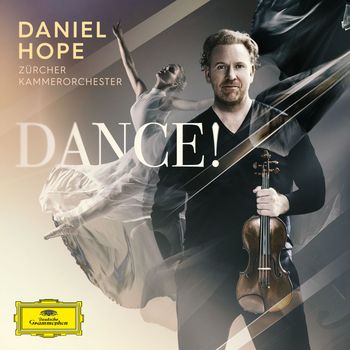
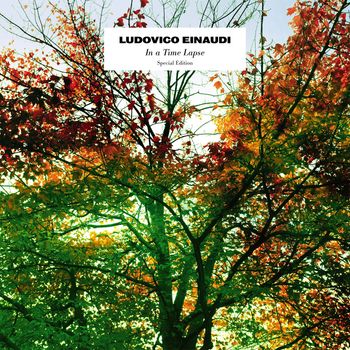
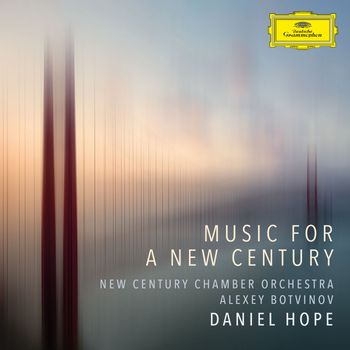
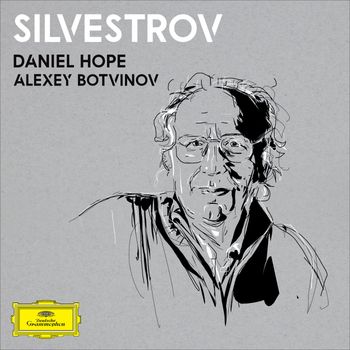
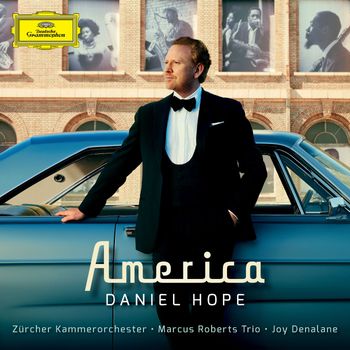
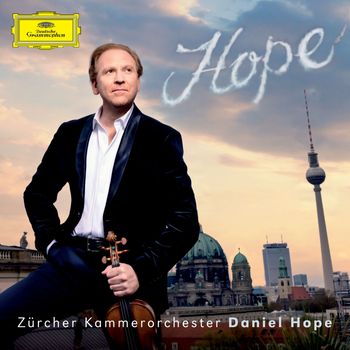
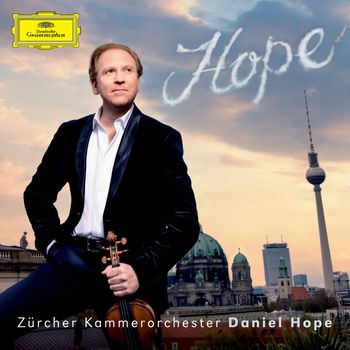
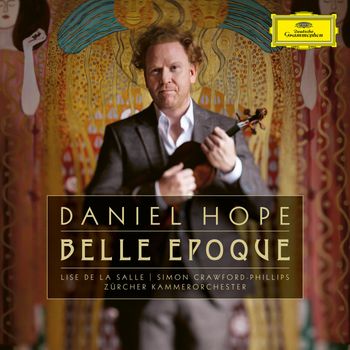
His releases of the 2010s and 2020s have continued to traverse stylistic and generic boundaries. In 2012 he offered the minimalist crossover of Ludovico Einaudi’s I Giorni, delivered a traditional homage to his artistic model Yehudi Menuhin, and issued two innovative albums: Vivaldi Recomposed, created with composer Max Richter, and, five years later, For Seasons, which juxtaposed a direct reading of Vivaldi’s Four Seasons with a dozen additional seasonal pieces drawn from various periods. This breadth of activity attracted wider public notice; in 2016 he appeared as a television presenter for Eurovision Young Musicians, the classical counterpart of the celebrated Eurovision Song Contest, and that same year he assumed the conductorship of the Zürcher Kammerorchester. Hope has recorded principally for Deutsche Grammophon, issuing Belle Époque and the pandemic-themed Hope@Home in 2020. Three further albums appeared in 2021, including two with the Zürcher Kammerorchester—Serenades, featuring music by Tchaikovsky, Elgar, and Mozart, and the disc titled Hope—plus a new Schnittke recording for violin and piano made with pianist Alexey Botvinov. In 2022 he released the recital album America on Deutsche Grammophon together with a collection devoted to Valentin Silvestrov; Music for a New Century followed in 2023. Two additional Deutsche Grammophon titles, Dance! and Irish Roots, arrived in 2024. By then his discography encompassed roughly fifty entries.