Award-winning saxophonist, percussionist, composer and arranger David Sanchez grew up absorbing Afro-Caribbean rhythms in Puerto Rico before immersing himself in jazz during his formative years in New York City. That dual foundation, paired with his strident yet rhythmic tone, has established him among the most respected jazz figures and composers of the twenty-first century. Years before his first album as a leader, The Departure, appeared in 1994, he served apprenticeships with Paquito d'Rivera, Claudio Roditi and Eddie Palmieri, the last of whom showed him how to fuse traditional Latin elements with jazz. At twenty-three he became the youngest musician in Dizzy Gillespie’s United Nations Orchestra. Released the year after Gillespie’s passing, The Departure inaugurated a series of widely praised and commercially successful recordings that included the Grammy-nominated Obsession in 1998 and Melaza in 2000. Coral earned the Grammy for Best Large Jazz Ensemble Album in 2005. The 2011 Afro-Cuban date Ninety Miles, recorded with Stefon Harris and Christian Scott, reached number thirteen on the jazz albums chart and inspired a documentary film. While maintaining an active schedule of touring, mentoring and writing, Sanchez remains a member of the SF Jazz Collective and issued his own Carib in 2019.
Born in Puerto Rico in 1968, he began playing congas at eight and pursued formal percussion studies both in school and privately. By twelve he had advanced sufficiently to enter La Escuela Libre de Música, remaining there from seventh grade through his final year of high school. During secondary school he also took up the saxophone, which quickly became his primary passion, and he trained on alto and soprano as well as flute and clarinet. After graduating in 1986 he enrolled at the Universidad de Puerto Rico in Río Piedras to study psychology, yet soon recognized music as his true calling and withdrew after one year. A scholarship took him to Rutgers University’s music program in New Jersey, where proximity to New York City allowed his professional career to accelerate. Limited English at the time drew him toward fellow Latino musicians such as Paquito d’Rivera and Claudio Roditi. Pianist Eddie Palmieri guided him, step by step, in merging Caribbean and West African folk traditions with jazz. His first major opportunity arrived when he won a substitute chair in Dizzy Gillespie’s United Nations Orchestra at twenty-three, becoming its youngest member; Gillespie was so taken with his sound that he kept Sanchez in the ensemble until the trumpeter’s death in 1993. Following the orchestra’s dissolution, Sanchez toured with the Philip Morris Superband and contributed to recordings by Slide Hampton & the Jazz Masters, of which he is a founding member, as well as Charlie Sepulveda, Kenny Drew, Jr., Hilton Ruiz and others.
Columbia signed him, and The Departure, cut in 1994 with Andy Gonzalez, Peter Washington, Leon Parker, Milton Cardona, Danilo Perez and Tom Harrell, received acclaim for its jazz syntax and its framing of Puerto Rican, Caribbean and broader Latin American musical dialects, though it did not chart. Sketches of Dreams appeared in 1995 with an expanded ensemble featuring Roy Hargrove, Jerry Gonzalez, Larry Grenadier and David Kikoski. Street Scenes followed in 1996, capturing Sanchez’s impressions of urban street life in cities such as Paris and New York. Produced by Branford Marsalis, 1998’s Obsession introduced a new band, entered the jazz album charts and brought Sanchez his first Grammy nomination. Marsalis also produced the next-century release Melaza, on which he guested, and the album earned both Grammy and Latin Grammy nominations after the band had performed extensively for American troops in Bosnia. Sanchez subsequently took a quintet augmented by strings on the road and later formed a sextet. Additional sideman work included Lalo Schifrin’s Latin Jazz Suite and Kenny Barron’s Spirit Song. Two contrasting 2001 albums, Y Sus Corridos Bravos and the self-produced Travesía, explored different facets of the folk-tradition-to-jazz continuum, while further sideman appearances encompassed Charlie Haden’s Nocturne and Steve Turre’s TNT. After an intense period of worldwide touring and a brief respite, the band returned to the studio in 2004; Coral, issued in 2005, earned a fifth Grammy nomination and Sanchez’s first Latin Grammy for Best Jazz Instrumental Album. Argentinian composer Carlos Franzetti supplied orchestrations performed by the City of Prague Philharmonic, and the program featured works by Hector Villa-Lobos, Antonio Carlos Jobim, Alberto Ginastera, Franzetti and originals. Sideman credits from this era include dates with Kenny Werner, Ignacio Berroa, Ray Barretto and Andy Narrell.
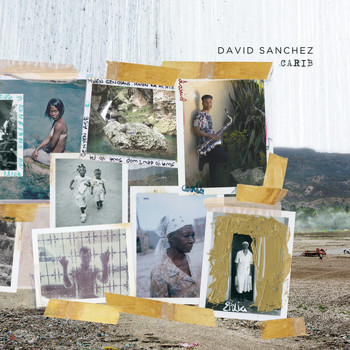
Cultural Survival, released on Concord Picante in 2008, garnered universal praise and a sixth Grammy nomination. That same year Sanchez participated in Takana Miyamoto and Kirk Whalum’s Promises Made: The Millennium Promise Jazz Project. In 2010 he joined Stefon Harris and Christian Scott for the Ninety Miles project, recorded in Havana with leading Cuban musicians and documented in both album and film form. He became a member of the SF Jazz Collective in 2013 and continues to perform and record with the ensemble. Teaching posts have included the Conservatory of Puerto Rico and the Conservatory of San Francisco, along with master classes at the Peabody Conservatory in Brazil, the Manhattan School of Music, Indiana University’s School of Music, Stanford University, the University of Memphis and Emory University, plus a year-long residency at Georgia State University. As a bandleader he maintains a worldwide touring schedule that blends mainstream jazz with Pan-African influences. In 2019, after two years of preparation, he returned to recording with Carib on Ropeadope; the album’s original compositions draw on Afro-Rican and Haitian melodies and rhythms. Two tracks, “Canto” and “Fernando’s Theme,” appear on the soundtrack to Robert Mailer Anderson’s film Windows on the World.

 A Thousand YesterdaysCarib · 2019Carib7:41
 Alas a volarAlas a volar · 2025Alas a volar3:52
 Perdoname (Cover)Perdoname · 2022Perdoname3:30
 No me digas que noNo me digas que no · 2024No me digas que no4:14

