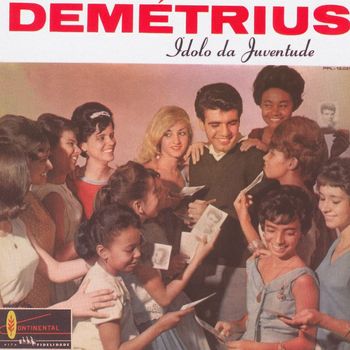
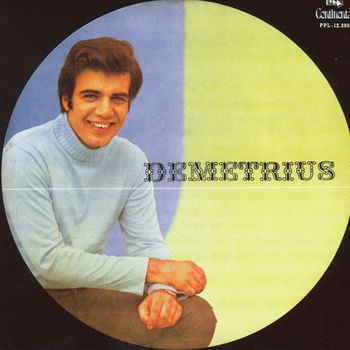
Demétrius stands among the early figures who helped shape the Brazilian rock sound that emerged during the 1980s. He composed original material in English along with Portuguese adaptations, issuing a total of eight LPs and CDs spanning the period from 1961 through 1999 while achieving widespread popularity throughout the 1960s and 1970s. Among his English-language rock compositions was "Hold Me So Tight," which Young covered toward the end of the 1950s. During the 1960s he enjoyed multiple successful releases, among them "A Bruxa" (Baby Santiago), "O Ritmo Da Chuva" as his take on John Gummoe's "Rhythm of the Rain," and "Voltou a Carta" as his rendition of Elvis Presley's "Return to Sender." Wanderléa achieved notable results in 1966 with her version of "Ternura," itself Demétrius' adaptation of Estelle Levitt's "Somehow It Got To Be Tomorrow Today," and the track became so closely tied to her persona that she earned the nickname "Ternurinha." Success persisted for Demétrius into the 1970s both as a songwriter and performer, with recordings such as "Ei, Meu Pai" and "Nas Voltas Do Mundo" becoming popular. His sertanejo (redneck) pieces found favor when interpreted by performers including Ari Toledo.