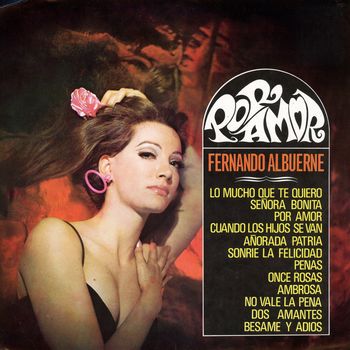
Fernando Albuerne began his career singing Cuban repertoire before establishing himself among the foremost interpreters of Spanish-language song across a wider spectrum. He appeared and committed material to disc in numerous countries where Spanish is spoken, dividing periods of residence between Caracas, Venezuela, his native Cuba, and ultimately Tampa, Florida. Few observers of the youthful Albuerne would have foreseen the eventual height of his recorded output; an agricultural path might have seemed the more probable route, given that his Havana University degree was in agricultural engineering and that his first employment after graduation placed him inside the orderly environment of soap manufacturing.
It is conceivable that extended periods spent testing hygiene products afforded extra opportunity to refine his vocal skills. Still in his early twenties, Albuerne abandoned commerce for an exclusive arrangement with Radio Cadena. By the closing years of the 1940s he was regularly sought for appearances in theaters, cabarets, and on television. International tours across Latin America followed, culminating in 1953 with acclaimed engagements in Madrid, Lisbon, and Paris. Albuerne ranks among the earliest Cuban artists to depart following the consolidation of Fidel Castro’s government at the start of 1960. His later years in Caracas reinforced an identity as a Latin artist whose perspective extended beyond any single locale. Rodven has issued multiple albums credited to Albuerne, among them the romantically themed and historically detailed Historia de Amor. Viewed collectively, his recordings constitute an outstanding anthology of Cuban and Mexican song.