George Emanuel Lewis stands among the most productive and globally celebrated figures working today as a composer, trombonist, electronicist, and educator. From the moment he entered the Association for the Advancement of Creative Musicians at nineteen, his connection to experimental music circles has remained unbroken. His recordings span an enormous stylistic range, and ensembles worldwide have presented his pieces. Although his résumé includes work across New Orleans, bebop, hard bop, modal, and free idioms, he has repeatedly clarified that he does not consider himself a jazz musician. His improvisational signature features extended phrases, refined articulation, and timbres that evoke the human voice. As a soloist he sustains precision at extreme speeds while retaining humor, warmth, and personal inflection, audible on Solo Trombone Record (1976) and Elements of Surprise with Anthony Braxton (1978). He moves with equal fluency through composition, conduction, and performance of electronic music; with Richard Teitelbaum he issued Homage to Charles Parker in 1979, and The Recombinant Trilogy appeared in 2021. His concert-hall scores encompass The Shadowgraph Series: Compositions for Creative Orchestra (2001) and Les Exercices Spirituels (2011). Lewis wrote the nearly eight-hundred-page history A Power Stronger Than Itself: The AACM and American Experimental Music, which received the American Book Award in 2009; George Lewis: Afterword, An Opera in Two Acts, drawn from that text, was captured by the International Contemporary Ensemble in 2023.
Born in Chicago in 1952, Lewis grew up with a father, George Thomas Lewis, who worked for the post office, studied electronics through the GI Bill, and maintained a deep affection for jazz; his mother, Cornelia Griffith Lewis, favored blues, soul, and R&B. He began in the city’s public schools, yet at nine his parents transferred him to the University of Chicago Laboratory School. Trombone lessons commenced that first semester, and he displayed immediate aptitude for theory, harmony, and arranging. By twelve he was already notating Lester Young solos for his instrument. In the late 1970s he pursued theory studies with Muhal Richard Abrams via an AACM outreach initiative. He entered Yale in 1969 at seventeen as a pre-law student, took music-theory courses, yet left after his sophomore year.
While in Chicago in 1971, Lewis followed the sound of an outdoor session near his parents’ home and met AACM co-founder Muhal Richard Abrams, trumpeter John Shenoy Jackson, saxophonist Steve Galloway, and guitarist Pete Cosey, who would soon join Miles Davis. Invited to the Pumpkin Room, he arrived with his trombone and was permitted to sit in with Joseph Jarman, Kalaparusha Maurice McIntyre, and Steve McCall; McCall later asked him to another engagement where he encountered Roscoe Mitchell, Malachi Favors, and Douglas Ewart. Abrams urged him to join the collective, and Lewis became its reading secretary while also holding a daytime United Steelworkers job and performing nightly with the Muhal Richard Abrams Big Band.
He resumed studies at Yale in 1972, coinciding with the launch of its Duke Ellington Fellowship Program, whose visitors included Ellington, Charles Mingus, Max Roach, and Dizzy Gillespie. There he met trumpeter Wadada Leo Smith, who would become a frequent collaborator, and earned a philosophy degree in 1974.
Activity accelerated quickly. Five years into AACM membership, Lewis had already worked with Roscoe Mitchell’s ensembles since 1975; in early 1976 he replaced Kenny Wheeler in Anthony Braxton’s quartet and toured Japan and North America that spring with the Count Basie Orchestra. He also released his debut, The George Lewis Solo Trombone Record, on Sackville and appeared on Braxton’s Creative Orchestra Music and Mitchell’s quartet album, both issued that year. In 1977 he performed with Abrams and Fred Anderson, and participated in Barry Altschul’s You Can’t Name Your Own Tune, Mitchell’s Nonaah, and Braxton’s Montreux/Berlin Concerts. The next year brought Another Place with Anderson, the duo Elements of Surprise with Braxton, Mitchell’s L-R-G; The Maze; S II Examples, and Lewis’s own Monads-Triple Slow Mix-Cycle-Shadowgraph, 5 on Black Saint, the first session to list him on Moog synthesizer; the sextet featured Anthony Davis, Douglas Ewart, Leroy Jenkins, Abdul Wadud, Mitchell, and Abrams.
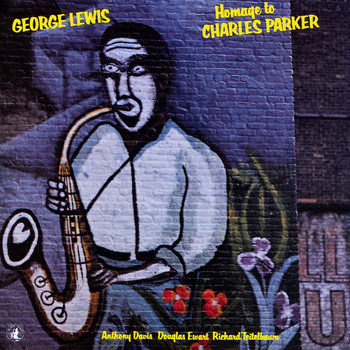
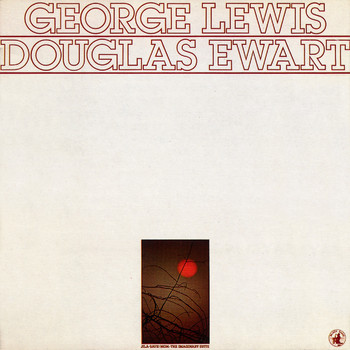
The decade closed with further Black Saint dates—Jila-Save! Mon.-The Imaginary Suite, Shadowgraph, and Homage to Charles Parker—while Lewis contributed to sessions by Anderson, Abrams, Mitchell, the Leo Smith Creative Orchestra, Jenkins, and Sam Rivers. In the 1980s he expanded his reach, recording the freely improvised Fables with Company, appearing on Karl Berger’s Live at the Donaueschingen Music Festival, joining John Zorn’s Archery, and participating in Material’s Memory Serves, Laurie Anderson’s Big Science, Yankees with Zorn and Derek Bailey, Steve Lacy’s Prospectus and Futurities, Globe Unity Orchestra’s Intergalactic Blow, Misha Mengelberg’s Change of Season and Dutch Masters, Anthony Davis’s Episteme, Hemispheres, and Variations in Dream Time, Braxton’s Four Compositions (Quartet) 1983, ICP Orchestra’s Bospaadje Konijneho, Rhys Chatham’s Factor X, Evan Parker’s Hook, Drift & Shuffle, Heiner Goebbels’ Der Mann im Fahrstuhl, and Irene Schweizer’s The Storming of the Winter Palace. News for Lulu, a hard-bop trio date with Zorn and Bill Frisell, emerged on Hat Hut.
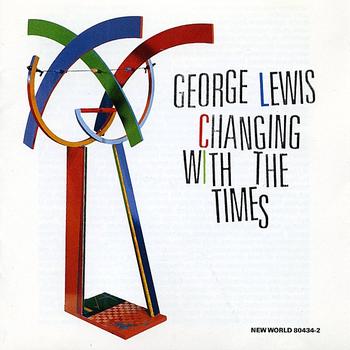
In 1990 Joe Sachse issued Duos: Berlin Tango with Lewis and David Moss; More News for Lulu documented the earlier trio’s European concerts. Lewis returned as a leader in 1993 with Voyager, featuring Mitchell, and joined the James Newton Ensemble’s Suite for Frida Kahlo and Vijay Iyer’s Memorophilia; Changing with the Times appeared on New World Records that year. Triangulation with Vinny Golia and Bertram Turetzky followed in 1995, as did his participation in Teitelbaum’s Golem. He appeared on Steve Coleman’s Genesis & The Opening of the Way in 1997, released The Usual Turmoil and Other Duets with Miya Masaoka in 1998, and closed the decade on Mitchell’s Nine to Get Ready and Now Orchestra’s WOWOW. CalArts awarded him the Alpert Award in the Arts in 1999; between the late 1980s and 2000 he taught at UC San Diego, Mills College, the School of the Art Institute of Chicago, the Koninklijke Conservatorium Den Haag, and Simon Fraser University.
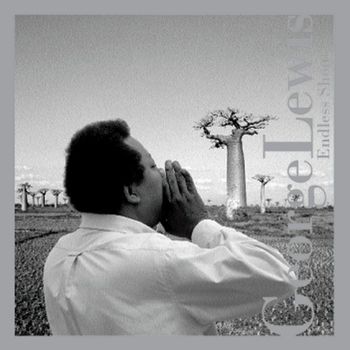
Endless Shout inaugurated a new century of recordings in 2000 on Tzadik. The Shadowgraph Series followed in 2001 with Now Orchestra. Lewis received a MacArthur Fellowship in 2002, reunited with Parker for From Saxophone & Trombone, and recorded Transition & Transformation with Turetzky and Mike Wofford. He rejoined Lacy for The Beat Suite in 2003. Columbia University appointed him Edwin H. Case Professor of American Music, Composition & Historical Musicology in 2004; that year and the next he appeared on Alvin Curran’s Maritime Rites, Han Bennink’s compilation, Schweizer’s Portrait, and David Borgo’s Reverence for Uncertainty and Ubuntu. Sequel (For Lester Bowie) and Streaming with Abrams and Mitchell both surfaced in 2006; he also played on Chatham’s Die Donnergötter. In 2008 he published “Foreword: After Afrofuturism” and released the 768-page monograph A Power Stronger Than Itself.
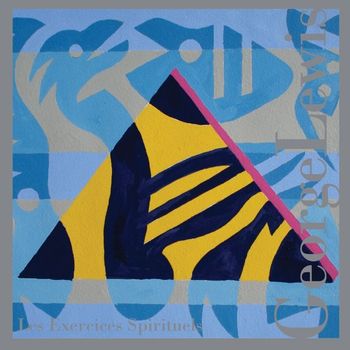
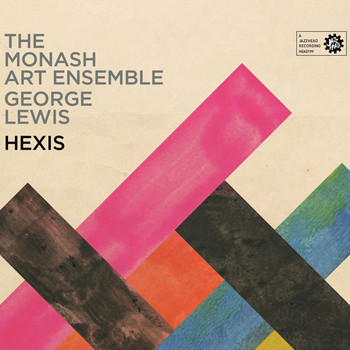
Transatlantic Visions appeared in 2009 on Rogueart; he also guested on Glasgow Improvisers Orchestra’s Metamorphic Rock, issued Sour Mash with Marina Rosenfeld, performed on Paul Rutherford’s Tetralogy, received the American Musicological Society’s Music in American Culture Award, and contributed “Interactivity and Improvisation” to the Oxford Handbook of Computer Music. Transfiguration II with Golia and Turetzky emerged in 2010. Les Exercices Spirituels was issued by Tzadik in 2011; Artificial Life 2007 with Glasgow Improvisers Orchestra followed in 2013, the same year he published “Americanist Musicology and Nomadic Noise.” Sonic Rivers with Zorn and Wadada Leo Smith inaugurated Tzadik’s Spectrum series in 2014; archival releases included 28 Rue Dunois Juillet 1982 and Hexis with the Monash Orchestra.
A Guggenheim Fellowship and election to the American Academy of Arts and Sciences arrived in 2015. The next year brought Creative Construction Set with Splitter Orchestra, The Will to Adorn with the International Contemporary Ensemble, and the archival Enfances 8 Janv. 1984 with Leandre and Daunik Lazro. Assemblage, containing 2012–2014 compositions, appeared in 2017 on New World Records with Ensemble Dal Niente; Mariel Roberts recorded “Spinner” on Cartography. Subsequent essays include “From Network Bands to Ubiquitous Computing: Rich Gold and the Social Aesthetics of Interactivity” and “The Situation of a Creole.”
A February 2018 duo concert with Mitchell at Berlin’s CTM Festival was released by Rogueart in 2019; another 2018 Swiss performance with Harald Kimmig, Daniel Studer, and Alfred Zimmerlin appeared on ezz-thetics as Trio Kimmig-Studer-Zimmerlin and George Lewis. Lewis joined the American Academy of Arts and Letters that year. In 2020 he published “A Small Act of Curation” and “Lifting the Cone of Silence From Black Composers” in The New York Times. Carrier Records issued Rainbow Family in 2021, documenting 1984 IRCAM performances with Lacy, Bailey, Leandre, and Ewart realized on three networked Apple II computers and Yamaha DX-7 synthesizers; Lewis handled all programming and hardware. “As We May Feel” appeared on Breaking News in 2022 alongside Oxana Omelchuk’s “Wow and Flutter.” New Focus Recordings released The Recombinant Trilogy the same year. George Lewis: Afterword, An Opera in Two Acts, recorded by the International Contemporary Ensemble, appeared on Tundra in 2023; its premiere had taken place in 2015 at the Museum of Contemporary Art Chicago. Lewis supplied the essay “Is Our Machines Learning Yet? Machine Learning’s Challenge to Improvisation and the Aesthetic” for Machinic Assemblages of Desire and assumed the chairmanship of Columbia’s composition area and directorship of its Reiner Center.