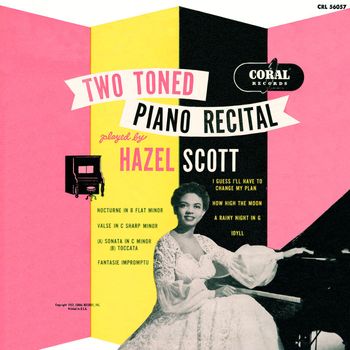
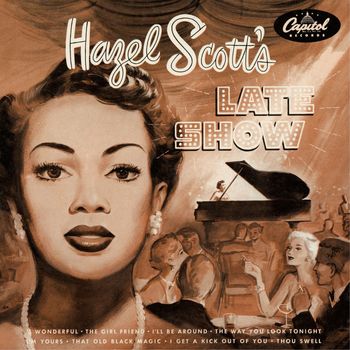
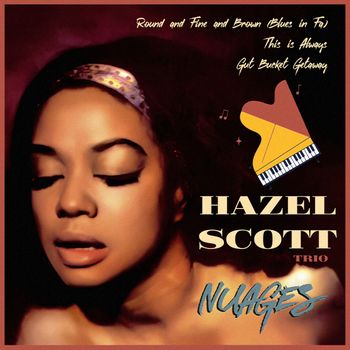
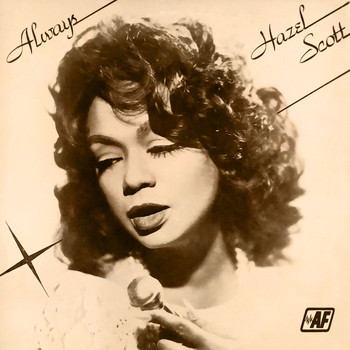
Hazel Scott succeeded in merging jazz and classical influences without ever invoking the third stream label or linking herself to that movement. She routinely chose classical works and improvised upon them, a method rooted in the ragtime period. Listeners responded strongly to pairings such as Liszt’s “Hungarian Rhapsody, no. 2” coupled with Chopin’s “Valse in D Flat Major, op. 64 no. 1,” even though some reviewers dismissed the approach as gimmickry—an assessment that occasionally proved accurate. Scott also proved capable as a bebop soloist, a sensitive ballad interpreter, a competent blues player, and an under-recognized vocalist. Her live nightclub presentations tended to outshine her studio recordings, where the missing energy of an audience and club environment left her original pieces open to closer inspection than they could sustain. She began classical piano training at Juilliard at age eight while simultaneously performing jazz in clubs. By the late 1930s and early 1940s she had become a featured attraction at both the downtown and uptown branches of Cafe Society. Scott hosted her own radio program in 1936, reached Broadway in 1938, and appeared in five films during the 1940s, including Rhapsody in Blue. Her songwriting output included “Love Comes Softly” and “Nightmare Blues.” She later hosted her own television series and was married to Adam Clayton Powell, Jr. The couple’s prominent union unraveled amid relentless public attention to Powell’s activities, influence, and conduct, ending in divorce. Although she recorded for Decca, Signature, Tioch, and Columbia, her strongest jazz album arrived on Charles Mingus’ Debut label with the 1955 release Relaxed Piano Moods, a session that also featured Mingus and Max Roach. It remains her only date currently available on CD.