When bossa nova emerged as Brazil’s defining popular sound in the mid-1950s, Antonio Carlos Jobim supplied its earliest benchmarks through compositions such as “The Girl from Ipanema” and “Desafindo.” Yet the style soon found a decisive new voice in singer, songwriter, and guitarist João Gilberto, whose radical reworking of its lyricism, pulse, and stage presence reshaped the genre and earned him the title “O Mito” (The Legend) at home. Beginning in the late 1950s, his trademark whisper-soft croon established a benchmark few vocalists have matched.
Born in 1931 in Juazeiro, Bahia, Gilberto displayed an early fixation on music; at fourteen his grandfather presented him with his first guitar over his father’s objections. Within twelve months of relentless practice he was fronting a band of schoolmates while absorbing the rhythmic nuances of contemporary Brazilian pop alongside the swing of Duke Ellington and Tommy Dorsey and the operetta phrasing of Jeanette MacDonald. At eighteen he left Juazeiro for Salvador, performing on local radio broadcasts. There he caught the ear of Antonio Maria, who recruited him as lead singer of the Rio-based ensemble Garotos da Lua.
His tenure with the group lasted only a year; habitual tardiness and unexplained absences led to his dismissal, behavior that later recalled the unpredictability of Sly Stone. Afterward Gilberto adopted a drifting existence, moving among acquaintances in Rio without a permanent address and seldom contributing to household costs. During this period he maintained a minimal public presence, favoring private marijuana use and selective club appearances while declining engagements where audiences might converse over the music. Despite evident gifts as both singer and guitarist, sustained success appeared remote.
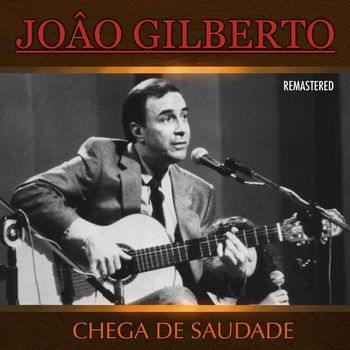
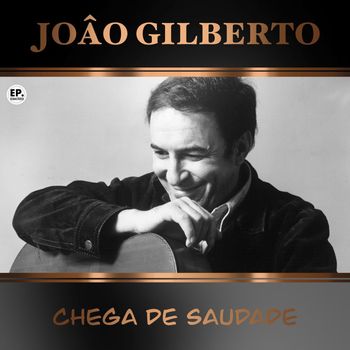
Nearly ten years of drift ended when singer Luís Telles persuaded him to relocate to Pôrto Alegre. Acting as both advocate and benefactor, Telles ensured Gilberto’s material needs were met so he could focus solely on music. Within months—having abandoned cannabis for fruit juice—Gilberto was the city’s most sought-after performer. It was in this setting that he refined his singular vocal and instrumental approach: an extremely soft, nasal delivery quieter and less vibrato-laden than that of Bing Crosby or Perry Como, paired with an intricately syncopated guitar technique that mirrored his singing. The 1959 album Chega de Saudade announced this fully realized style and cemented his reputation as the architect of modern bossa nova.
True to his independent streak, Gilberto left Brazil after that debut and two subsequent releases, residing in the United States until 1980. There he collaborated with saxophonist Stan Getz and recorded works by Dorival Caymmi and Ary Barroso. Returning to Brazil in the early 1980s, he worked with Gilberto Gil, Caetano Veloso, Maria Bethania, Gal Costa, and Chico Buarque. Although his record sales never approached those of his peers, each acknowledged his profound influence. In later decades he lived largely out of the public eye, secure in the knowledge that he had redirected Brazilian music by claiming bossa nova as his own—and Brazil’s. João Gilberto died in Rio de Janeiro on July 6, 2019, at the age of 88.