Since emerging within the creative jazz and new music spheres during the closing years of the 1960s and the opening stretch of the following decade, Joe McPhee has established himself as a profoundly expressive composer, improviser, and multi-instrumentalist. The 1970 album Black Magic Man marked the inaugural release on Hat Hut Records, showcasing his extensions of the approaches pioneered by John Coltrane and Albert Ayler. Over the ensuing five decades he sustained that trajectory through associations with numerous prominent figures such as Jimmy Giuffre and Andre Jaume on River Station in 1993, Ken Vandermark on A Meeting in Chicago in 1997, and Peter Brötzmann on Guts in 2013, while maintaining steady activity in Trio X with bassist Dominic Duval and drummer Jay Rosen. McPhee’s discography encompasses hundreds of sessions. He delivered The Sweet Spot in 2021 alongside drummer Michael Bisio, percussionist Juma Sultan, and cellist Fred Lonberg-Holm, then followed with Existential Moments in 2022 featuring bassist John Edwards and drummer Klaus Kugel. Across his extended trajectory, McPhee has demonstrated the seamless integration of emotional depth and conceptual foundations within creative improvised music.
Born November 3, 1939, in Miami, Florida, McPhee took up the trumpet at age eight. He persisted with the instrument through high school and subsequently within a U.S. Army ensemble based in Germany, where exposure to traditional jazz first occurred. Clifford Thornton’s Freedom and Unity, issued on the Third World label in 1967, constitutes the earliest recording to feature McPhee. Beginning in 1968 he added the saxophone and thereafter explored an array of instruments, among them pocket trumpet, clarinet, valve trombone, and piano, while engaging both acoustic and electronic domains.
McPhee’s initial efforts as a leader surfaced on the CjR imprint, established in 1969 with painter Craig Johnson. These comprised the Joe McPhee Quartet’s Underground Railroad in 1969, Joe McPhee’s Nation Time in 1970, and Trinity by Joe McPhee, Harold E. Smith, and Mike Kull in 1971. By 1974 Swiss entrepreneur Werner X. Uehlinger had encountered McPhee’s issued material and unreleased tapes, prompting him to launch the Hat Hut label expressly to document the artist’s output. The label’s debut LP was the 1970 recording Black Magic Man. Subsequent Hat Hut releases included The Willisau Concert and the landmark solo album Tenor in 1976. McPhee’s earliest documented work often reflected the activist currents of the late 1960s and early 1970s; Nation Time, for instance, honors poet Amiri Baraka, while Joe McPhee & Survival Unit II at WBAI’s Free Music Store, 1971—eventually issued as a Hat Art CD in 1996—embodies an anguished post-Coltrane expression of freedom and liberation. Later endeavors, however, centered predominantly on the intrinsic pleasures of sonic discovery rather than political imperatives.
With the arrival of the 1980s and several Hat Art releases already to his credit, McPhee encountered composer, accordionist, performer, and educator Pauline Oliveros, whose “deep listening” principles reinforced his pursuit of extended instrumental and electronic methods. He also studied Edward de Bono’s Lateral Thinking: A Textbook of Creativity, which outlines strategies for problem-solving through disruption of linear sequences and arrival at solutions via alternative perspectives. De Bono’s ideas prompted McPhee to adapt this lateral approach to creative improvisation, yielding the notion of “Po Music.” McPhee characterizes “Po Music” as a “process of provocation” employed to “move from one fixed set of ideas in an attempt to discover new ones,” adding that “It is a Positive, Possible, Poetic Hypothesis.” The application of these Po principles appears across Hat Art recordings such as Topology, Linear B, and Oleo & a Future Retrospective.
Despite extensive documentation on Hat Hut, McPhee had not obtained an agreement with any United States-based label and remained comparatively unrecognized domestically as the decade advanced; consequently he withdrew temporarily to attend to his aging parents. Reentering performance and recording circuits in the 1990s, he gradually garnered broader recognition within the North American creative jazz milieu. Thereafter he performed and recorded extensively in both leadership and collaborative roles on labels including CIMP, Okka Disc, Music & Arts, and Victo. In 1996, two decades after Tenor, Hatology presented the second solo album As Serious as Your Life, this time encompassing multiple instruments. McPhee also initiated a productive association with Chicago reedman Ken Vandermark, documented on the 1998 Okka Disc CD A Meeting in Chicago through dialogues with Vandermark and bassist Kent Kessler. That connection further resulted in McPhee’s participation on the Peter Brötzmann Chicago Octet/Tentet three-CD box set issued by Okka Disc the same year.
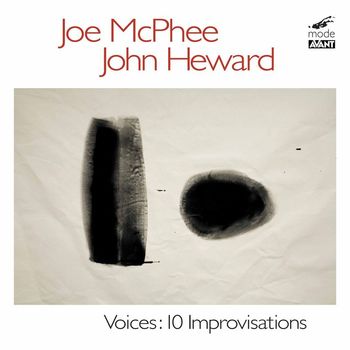
As the 1990s concluded, McPhee assembled a trio with bassist Dominic Duval and drummer Jay Rosen, unveiling the ensemble at a New York City jazz festival. Owing to limited press coverage, the three settled on the name Trio X. Numerous Trio X recordings subsequently appeared on Cadence Jazz and CIMP, among them Rapture (1998), The Watermelon Suite (1999), On Tour: Toronto/Rochester (2001), In Black and White (2002), Journey (2003), and The Sugar Hill Suite (2004), earning favorable commentary for both the discs and the group’s concert and festival appearances. In October 2008 Trio X undertook a tenth-anniversary tour across the United States and issued a limited-edition seven-CD box set capturing seven performances from the Midwest and New York state. The twenty-first century brought further releases including No Greater Love (2000), Voices: Ten Improvisations (2008), and Tomorrow Came Today (2009).
McPhee’s activity throughout the second decade of the new century remained unceasing, with near-constant touring and recording projects that encompassed fresh and recurring partnerships alongside numerous archival releases. Blue Chicago Blues, a 2010 duo recording with bassist Ingebrigt Haker Flaten, appeared that year, as did a four-disc box of live Trio X material from the 2000s and 2010s; Corbett vs. Dempsey also issued the retrospective Solo (1968-1973). The year 2011 yielded at least six releases, among them Creole Gardens (A New Orleans Suite) with drummer Michael Zerang, Ibsen’s Ghosts with Haker Flaten, Jeb Bishop, and Zerang, and OTO alongside Decoy. In 2012 McPhee joined the international tribute concert marking the fortieth anniversary of Albert Ayler’s passing, closing the program with a solo performance preserved on the Rogue Art album 13 Miniatures for Albert Ayler; additional collaborations with Haker Flaten and Decoy, plus Ithaca with pianist Eli Keszler, also surfaced. The following year produced no fewer than ten releases across varied settings, including Nation Time: The Complete Recordings (Corbett vs. Dempsey), What / If / They Both Could Fly in duo with Evan Parker, the solo Sonic Elements (both on Clean Feed), Last Notes with Thurston Moore and Bill Nace, Red Sky with drummer Paal Nilssen-Love, and featured solo appearances on Trespass Trio’s Human Encore and the Deep Listening Band’s Looking Back.
Although Trio X touring occupied substantial portions of 2014 and generated additional concert documents, McPhee issued two further recordings that year: Quod with Jean-Marc Foussat and Sylvain Guérineau, and Babylon in collaboration with Konstrukt. The latter partnership extended into 2015 with If You Have Time. Returning to Clean Feed, McPhee released Skullduggery, a collaborative album with the Amsterdam-based trio Universal Indians. Not Two presented This Is Our Language, a quartet date with Rodrigo Amado, Chris Corsano, and Kent Kessler. Archival collections also emerged: Solos: The Lost Tapes 1980/1981/1984 on Roaratorio and the extended EP Alone Together: The Solo Ensemble Recordings 1974 & 1979 from Corbett vs. Dempsey. Nilssen-Love’s PNL label issued Soul Stream, a quartet featuring drummer Lasse Marhaug and Japanese koto master Michiyo Yagi, together with Candy, a seven-disc box set of Nilssen-Love’s duos with McPhee.
During the opening eight months of 2016 McPhee toured extensively in the United States and Europe, including an appearance with Universal Indians at AylerFest 2016. Recordings from that period comprise The Paris Concert in trio with guitarist Raymond Boni and synthesist Jean-Marc Foussat, the archival Zurich (1979), and a vinyl edition of Soul Stream. The live album My Undocumented Alien Clarinet, capturing a 2006 performance with electronics-based musician Bryan Eubanks, appeared in 2017. The subsequent year involved several collaborations: Brace for Impact with Mats Gustafsson, Keep Going with Hamid Drake, and A History of Nothing reuniting him with saxophonist Amado. In 2019 McPhee participated in or led sessions on no fewer than ten albums, including pedal steel guitarist Susan Alcorn’s Invitation to a Dream with Ken Vandermark, At the Hill of James Magee with saxophonist John Butcher, and Song for the Big Chief and Lift Every Voice and Sing with drummer/percussionist Paal Nilssen-Love. The following year the improv trio Decoy joined McPhee for AC / DC, their third recording together within a decade; he and Marhaug recorded the duo album Harmonia Macrocosmica; and McPhee collaborated with saxophonist Dave Rempis, cellist Tomeka Reid, bassist Brandon Lopez, and Nilssen-Love on the limited-edition LP Of Things Beyond Thule, Vol. 1. Corbett vs. Dempsey also released the double-length set Black Is the Color, containing vintage live recordings from 1969 by the Contemporary Improvisational Ensemble and a quartet concert co-led by McPhee and vocalist Octavius Graham.
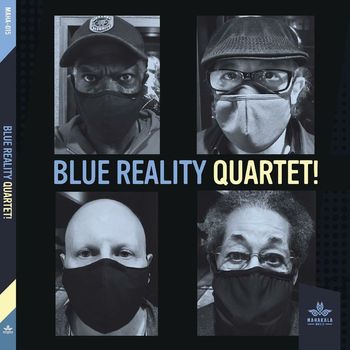
Early in 2021 Corbett vs. Dempsey issued the solo recording Route 84 Quarantine Blues, captured at home amid the COVID-19 pandemic. Blue Reality Quartet! on Mahakala Music introduced a new ensemble with clarinetist Michael Marcus and drummers Jay Rosen and Warren Smith. Idyllic Noise presented Tell Me How Long Has Trane Been Gone (For James Baldwin & John Coltrane), a duo album with bassist John Edwards. McPhee concluded the year with The Sweet Spot, an improvised studio quartet featuring cellist Fred Lonberg-Holm, drummer Michael Bisio, and percussionist Juma Sultan for Rogue Art. In March 2022 Poland’s Not Two label released Existential Moments, a live 2019 trio recording with Edwards and Klaus Kugel.