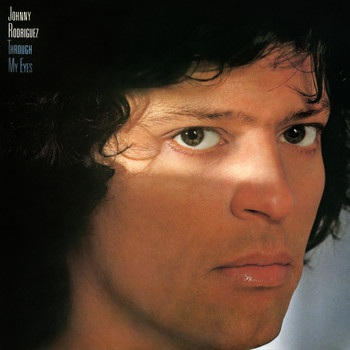
Born in 1951 in Sabinal, Texas, roughly ninety miles from the Mexican border, Johnny Rodriguez established himself as a steady source of country radio successes throughout the 1970s. His older sibling Andres, an avid country listener, gave him a guitar at age seven, and by his teenage years he was already performing both instrumentally and vocally. At sixteen he served as captain of his high-school football squad, yet the loss of his father to cancer soon triggered a period of reckless behavior that produced four arrests within two years. During one of his incarcerations, Texas Ranger Joaquin Jackson overheard Rodriguez singing and arranged an introduction to promoter Happy Shahan, who employed him as a singing stagecoach driver at Alamo Village Amusement Park from 1970 through 1971. While working there, he caught the attention of Tom T. Hall and Bobby Bare, who brought him to Nashville to appear with Hall’s Storytellers. Shortly afterward he joined the Mercury roster and issued his first single, “Pass Me By (If You’re Only Passing Through),” in early 1973; the track reached the Top Ten and initiated a streak of fourteen consecutive Top Ten entries. The follow-ups “Ridin’ My Thumb to Mexico” and “You Always Come Back (To Hurting Me)” both claimed the top chart position.
In 1974 he scored Top Five successes with “Dance With Me (Just One More Time)” and “We’re Over,” along with the number-one single “That’s the Way Love Goes.” The next year proved still stronger: “I Just Can’t Get Her Out of My Mind,” “Just Get Up and Close the Door,” and “Love Put a Song in My Heart” all reached number one. Additional Top Five placements arrived in 1976–1977 with “I Couldn’t Be Me Without You,” “I Wonder If I Ever Said Goodbye,” and “Desperado.” His association with Mercury ended in 1979, after which he moved to Epic. That same year “Down the Rio Grande” returned him to the Top Ten, but a lengthy commercial drought followed. He reentered the Top Ten in 1983 with “Foolin’” and “How Could I Love Her So Much,” the final Top Ten singles of his career. His last chart appearance came in 1988 with the Top Twenty hit “I Didn’t (Every Chance I Had)” on Capitol. During the 1990s he released two honky-tonk-oriented albums, Run for the Border (Intersound, 1993) and You Can Say That Again (Hightone, 1996).