
Biography
The San Francisco outfit Lamb remains known chiefly through its inclusion on the Fillmore: The Last Days live compilation, a release dominated by established headliners such as the Grateful Dead, Santana, and Boz Scaggs. In truth the group issued three albums during the first half of the 1970s and stood apart from nearly every other act on the local circuit. Their sound fused jazz, folk, singer/songwriter pop, gospel, and occasional classical or avant-garde elements, rendering any straightforward rock classification questionable. At the center stood vocalist Barbara Mauritz, whose blues-inflected, grounded delivery lent weight to the band’s often mystical and poetic texts while also navigating them with subtlety. Echoes of Tim Buckley, Judy Collins during her art-song period, David Ackles, and Savage Rose at its most gospel-drenched surfaced at times, yet the overall body of work remained too singular for direct comparison. Commercial success proved elusive, the music too oblique despite numerous passages of striking force, beauty, and mystery.
Mauritz, a singer from Texas, and multi-instrumentalist Bob Swanson, whose primary instrument was guitar, formed the group and wrote its material both individually and jointly. Exposure arrived after they supported Crosby, Stills, Nash & Young for several nights at Winterland in November 1969. Bill Graham subsequently took on management duties, while David Rubinson—previously associated with Santana and Moby Grape—produced the debut. That Fillmore-label effort, A Sign of Change, proved the most austere and exploratory of the three, built largely around acoustic jazz-folk settings that highlighted Mauritz’s voice against impressionistic, dreamlike lyrics. Retaining Rubinson as executive producer, the band shifted to Warner Bros. for Cross Between, which adopted somewhat more conventional rock frameworks and emphasized gospel textures on several numbers while other tracks retained the earlier penchant for elusive yet captivating verse more aligned with classically tinged art song than standard pop.
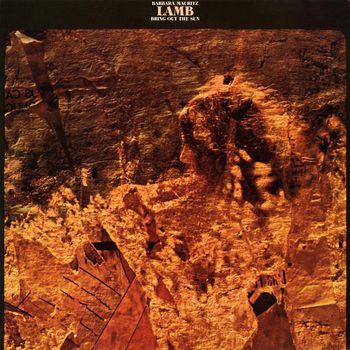
Their final release, Bring Out the Sun, leaned further into gospel-rock territory and represented their most accessible recording, though still far from mainstream; a pair of selections nonetheless revisited the experimental jazz-folk-classical vein. The album appeared under a joint Lamb and Barbara Mauritz billing even though Swanson continued contributing songs and instrumentation. Mauritz soon embarked on a solo path with the Columbia album Music Box. That venture failed to gain traction, though she persisted with performing and songwriting, including numerous commercial jingles. In the mid-1980s Swanson resumed photography on a full-time basis. The ensemble founded by Mauritz and Swanson bears no connection to the later Christian-rock act Lamb that began recording in the 1970s or the drum’n’bass duo Lamb that emerged in the late 1990s.