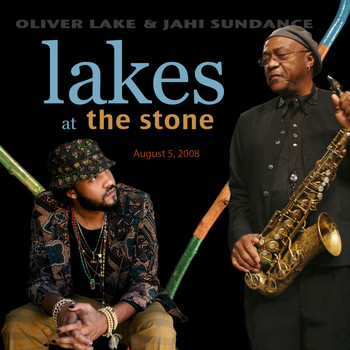
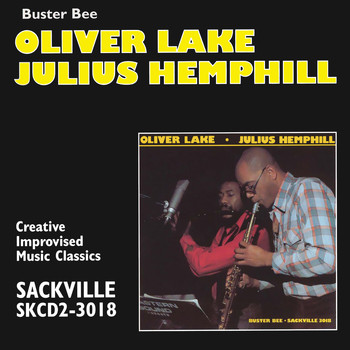
As a soloist, Oliver Lake projects an explosive unpredictability, echoing Eric Dolphy through the exceptional agility with which he covers the alto saxophone’s complete range. His piercing, blues-infused, and sharply incisive tone—reminiscent of Maceo Parker—became the signature lead voice for the World Saxophone Quartet, the ensemble that produced arguably Lake’s most lasting work.
Lake first played drums during childhood in St. Louis before taking up the saxophone at age eighteen. He earned a bachelor’s degree from Lincoln University in 1968. Between the late 1960s and early 1970s he taught school, performed in varied St. Louis settings, and co-led the musicians’ collective Black Artists’ Group (BAG) with Julius Hemphill, Charles “Bobo” Shaw, and others. From 1972 to 1974 Lake resided in Paris, performing in a quintet of fellow BAG members. By 1975 most of those colleagues had joined him in New York, where he participated in the loft jazz scene. In 1976 he formed the World Saxophone Quartet with Hemphill, Hamiet Bluiett, and David Murray. Over the following two decades the group attained a level of popularity rarely matched by any free-jazz ensemble; its late-1980s recordings of Ellington material and R&B songs drew listeners who might otherwise have overlooked the style.
Lake maintained an active career as a leader outside the WSQ, issuing strong small-group dates on Arista/Freedom and Black Saint during the 1970s and 1980s. In the 1980s he directed the reggae-inflected band Jump Up, which achieved notable commercial success even as its artistic resonance diminished relative to his jazz output. During the 1990s Lake continued to explore new territory; a duo recording with classically trained pianist Donal Fox allowed him to reveal the more fanciful aspects of his musical identity. Late-1990s performances with the WSQ, his own ensembles, and duo partners such as the hyper-dexterous pianist Borah Bergman confirmed that Lake remained at the height of his powers.
The saxophonist sustained performance and recording activity as both leader and collaborator into the twenty-first century. He formed Trio 3 with bassist Reggie Workman and drummer Andrew Cyrille, releasing Open Ideas (2002, Palmetto), Berne Concert (2008, Intakt, with pianist Irène Schweizer), and At This Time (2009, Intakt, with Geri Allen). Additional projects included the 2005 Barking Hoop album Frozen Ropes with the String Trio of New York, the Oliver Lake Big Band’s Cloth (2003), and the 2006 Oliver Lake Quartet Live featuring Dine’ (Navaho tribe) vocalist and flutist Mary Redhouse. In 2006 Lake received the Mellon Jazz Living Legacy Award at the Kennedy Center. Two years later Passin’ Thru reissued his 1974 album Passing Thru and issued Makin’ It by the Oliver Lake Organ Trio; he also released Time Being by Trio 3 on Intakt. Lake remained with Intakt for the 2010 trio session For a Little Dancin’, recorded with European rhythm section Dieter Ulrich and Christian Weber.
Although touring occupied most of the next three years, Lake also composed and appeared on other artists’ recordings. In 2013 he and guitarist Marc Ducret served as featured soloists on Tarbaby’s Fanon (Rogue Art); he also appeared with Katja Cruz on Hexaphone: The Cosmology of Improvised Music (Rudi) and with Weber, Ulrich, and Nils Wogram on All Decks (Intakt). In 2014 Lake was awarded the Doris Duke Artist Award and performed on René Bottlang’s and Andy McKee’s Autumn in New York. He and bassist William Parker issued the 2015 Intakt duo recording To Roy, a tribute to trumpeter Roy Campbell, Jr. The following year Lake released Live at the Downtown Music Gallery NYC, a collaboration with Vinny Golia, Ross Hammond, and Adam Lane. In 2017 Passin’ Thru issued Right Up On, a set of Lake compositions performed with the FLUX Quartet.


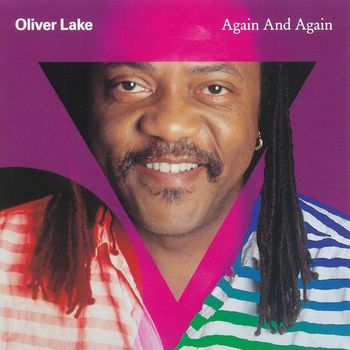 Again and AgainAgain And Again · 1991Again And Again7:15
 Lef' SidedImpala · 1988Impala7:47