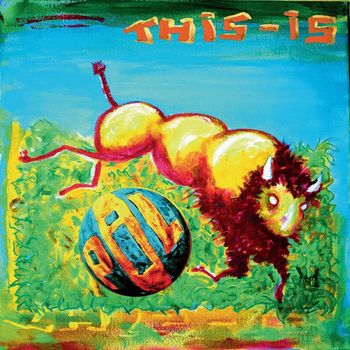
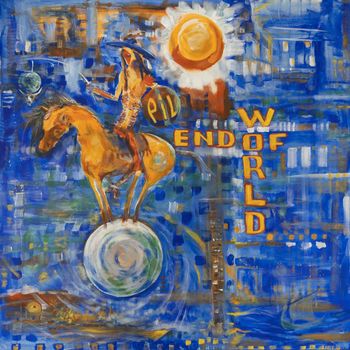
After the Sex Pistols dissolved, John Lydon launched Public Image Ltd. as an ever-evolving musical vehicle through which the caustic frontman and wordsmith could pursue his artistic impulses on his own terms. Across the various eras of the group, officially shortened to PiL, the sound ranged from low-end post-punk force on the 1978 debut Public Image: First Issue, to an inventive blend of Krautrock and dub on 1979’s Metal Box, to robust and precisely crafted alternative rock on 1986’s Album, or to sleek yet jagged dance-oriented pop on 1989’s 9, along with numerous other phases. Even as the roster and sonic direction kept changing, Lydon’s caustic vocal delivery—laden with rage, suffering, and occasional biting humor—supplied a consistent thread across PiL’s shifting identities, while his best collaborators matched that intensity with music as forceful and immersive as his commanding presence. Lydon reactivated PiL for concerts in 2009, and the resulting records This Is PiL (2012), What the World Needs Now (2015), and End of World (2023) contained some of his most compelling material in decades.
The Sex Pistols closed their final American tour on January 14, 1978, shortly after Never Mind the Bollocks, Here’s the Sex Pistols appeared, and the band fractured three days later. Lydon first journeyed to Jamaica alongside Virgin Records chief Richard Branson to scout reggae acts, then headed back to London. He soon contacted longtime acquaintance Jah Wobble, born John Wardle, about starting a fresh project. In May 1978, singer Lydon and bassist Wobble added former Clash guitarist Keith Levene and drummer Jim Walker, and the quartet commenced rehearsals. Two months afterward, Lydon christened the outfit Public Image, appending Ltd. weeks later. Virgin Records promptly inked the new ensemble, issuing their debut single “Public Image” in October 1978. It achieved chart success, and Public Image: First Issue followed that December. Though the album moved briskly in England and performed solidly in the U.S. as an import, it stayed unavailable domestically until 2013. True to their contrarian stance, the band staged its inaugural concert on Christmas Day 1978.
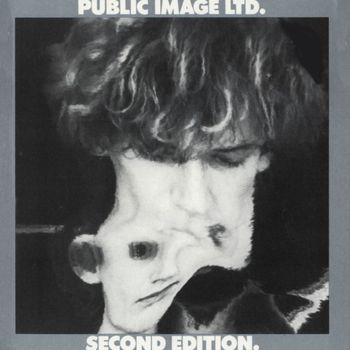
PiL underwent its initial lineup shift when Jim Walker departed, with Richard Dudanski—previously of the 101’ers alongside Joe Strummer—assuming drumming duties. Later that year the group issued the single “Death Disco,” reflecting Lydon’s sorrow over his mother’s passing. In November 1979, PiL delivered its second album, the expansive Metal Box, issued as three 12-inch discs cut at 45 rpm inside a metal film canister. Dudanski exited during the sessions, and Martin Atkins stepped in on drums. Although critics praised Metal Box, its costly packaging prompted Warner Bros., the band’s American label, to reissue it in July 1980 as the two-LP Second Edition housed in a standard sleeve. The U.S. release preceded PiL’s first American tour, during which Lydon frequently exchanged sharp words with fans requesting Sex Pistols material. The trek also featured an American Bandstand appearance where Lydon lightheartedly declined to lip-sync “Poptones.” Paris au Printemps, a live set captured in France, surfaced in 1980 mainly to counter widespread European bootlegs.
By the completion of the third studio album, 1981’s stripped-down The Flowers of Romance, both Jah Wobble and Martin Atkins had exited, and visual artist Jeannette Lee joined the ranks. In May 1981, PiL accepted a solitary engagement at New York’s Ritz. The ensemble delivered a highly abstract performance behind a stage screen onto which video imagery was projected, revealing only the members’ silhouettes. The crowd reacted angrily, sparking a riot that dominated music-press coverage on both sides of the Atlantic. In 1982, PiL crossed North America with a refreshed configuration featuring Martin Atkins back on drums and Pete Jones on bass.
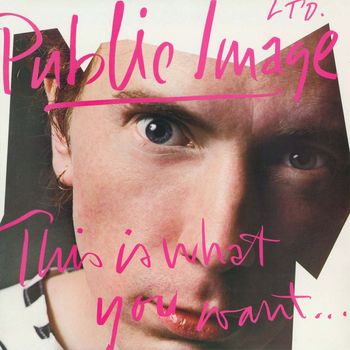
Work on the fourth studio album encountered creative friction between Lydon and Keith Levene, compounded by Levene’s substance issues, prompting Levene to exit and abscond with the tapes. He independently issued a version titled Commercial Zone, while Lydon restarted the project. In 1983, after Levene and Pete Jones left PiL, Lydon and Atkins assembled an ensemble of obscure New Jersey musicians for Japanese dates; two performances were captured digitally, yielding the highlights collection Live in Tokyo that September. The single “This Is Not a Love Song” became a U.K. Top Five hit and later appeared on the 1984 album This Is What You Want…This Is What You Get, built largely around Lydon’s reworkings of the Levene material.
A subsequent PiL configuration—Atkins, guitarist Mark Schulz, and keyboardist Jebin Bruni—toured globally behind This Is What You Want..., and Lydon composed fresh songs while traveling. He ultimately discarded this iteration for the fifth studio album; producer Bill Laswell enlisted an eclectic roster including Steve Vai, Ginger Baker, Tony Williams, Ryuichi Sakamoto, and Bernie Worrell. Released in early 1986, Album (issued as Compact Disc and Cassette on other formats) reached number 14 on the U.K. charts, with the single “Rise” peaking at number 11, and registered respectably in the United States. Lydon mounted a supporting tour with guitarist John McGeoch (ex-Magazine and Siouxsie and the Banshees), bassist Allan Dias, guitarist-keyboardist Lu Edmonds (formerly of the Damned and the Mekons), and drummer Bruce Smith (ex-Pop Group). Preferring to retain this lineup rather than reconvene with Laswell, Lydon recorded 1987’s Happy?, which spawned the singles “Seattle” and “The Body.” Extensive touring followed across North America, the U.K., Europe, and South America until Lu Edmonds departed at the close of 1988 due to health concerns. With McGeoch, Dias, and Smith, Lydon completed 1989’s 9, the band’s ninth overall release. PiL joined the “Monsters of Alternative Rock” package alongside New Order and the Sugarcubes for North American dates.
In 1990, PiL compiled The Greatest Hits So Far, containing thirteen catalog tracks plus the new “Don’t Ask Me,” which climbed to number 22 on the U.K. singles chart. After Bruce Smith exited, Lydon, McGeoch, and Dias enlisted session players for That What Is Not, issued in February 1992. The group participated in MTV’s 120 Minutes Live North American package with Big Audio Dynamite II (including former Clash guitarist Mick Jones, their first joint stage appearance since the Sex Pistols’ 1976 “Anarchy” tour), Live, and Blind Melon. Following further European, U.K., and South American touring, Dias departed, and in 1993 Lydon announced PiL’s retirement to focus on solo work. The four-disc retrospective Plastic Box emerged in 1999.
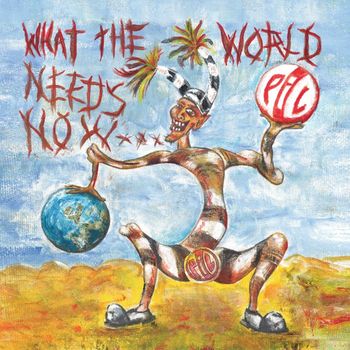
Following a solo album, his memoirs, multiple Sex Pistols reunion tours, and assorted television appearances, Lydon resurrected PiL in 2009 for U.K. concerts, financing the endeavor with earnings from a British butter commercial. This incarnation reunited PiL veterans Lu Edmonds and Bruce Smith with bassist Scott Firth. The initial British run succeeded, yielding the 2010 live album Alife 2009 drawn from one date as the band extended shows into the United States and Europe. Their 2011 Isle of Wight Festival set also received a live release. The studio album This Is PiL arrived in 2012, followed by a full year of touring in 2013. What the World Needs Now... appeared in 2015, marking the first consecutive studio albums from the revived lineup. The 2017 documentary The Public Image Is Rotten chronicled PiL’s lengthy history and screened at international festivals, accompanied by the 2018 box set The Public Image Is Rotten: Songs from the Heart (five CDs and two DVDs). Lydon revisited his catalog with the 2017 lyric collection Mr. Rotten’s Songbook.
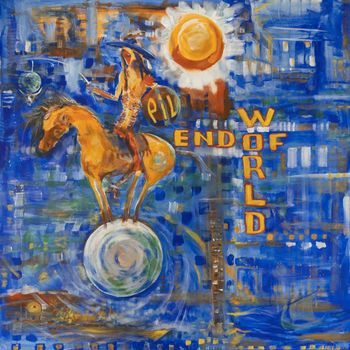
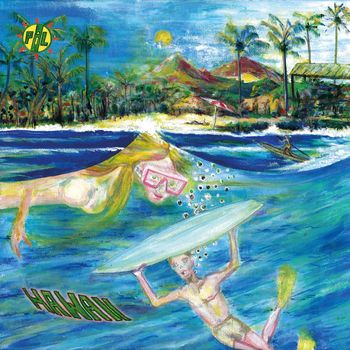
Lydon competed on the sixth season of The Masked Singer in 2021 as The Jester, performing “School’s Out” by his former idol Alice Cooper before elimination. Virgin issued the archival Concert: Live at Brixton Academy 27.5.86 in January 2022 from the post-Album tour. In 2023, PiL unveiled the tender single “Hawaii,” a love song Lydon penned for his wife Nora Foster, who passed after prolonged illness that April. He entered the track in that year’s Eurovision Song Contest, where it failed to advance from the qualifiers. The song featured on End of World, the third studio album since PiL reformed with the Lydon/Edmonds/Firth/Smith configuration.