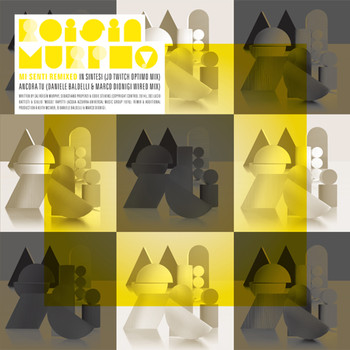
Róisín Murphy shapes an intrepid, wide-ranging strain of pop by absorbing and transforming distant sources that stretch from disco to hot jazz. Building on the broad palette she developed fronting Moloko, the Irish artist pursued an even more singular path once she began releasing music under her own name. Her 2005 debut Ruby Blue arrived as a striking surprise, weaving together found sounds, vintage vocal pop, funk, and additional elements into tracks that felt simultaneously offbeat and instantly memorable. Two years later, Overpowered tightened the focus toward a more accessible pop framework while still preserving her unmistakable personal stamp. Standalone releases such as the 2012 single “Simulation” and the 2014 Italian-language EP Mi Senti proved equally central to her catalog as full-length projects, among them the 2015 Mercury Prize-nominated Hairless Toys, which fused house, glam rock, and country with refined assurance. The throbbing pulse of 2020’s Róisín Machine and the psychedelic grooves of 2023’s Hit Parade further confirmed her status as a wholly distinctive voice.
Murphy was born in Dublin and relocated with her family to Manchester, England, at age twelve; she stayed behind when her parents moved back to Dublin four years afterward. Living independently by sixteen, she first sang in a post-punk group formed with school friends before shifting to Sheffield, where she immersed herself in the local club circuit. In 1994 she teamed with producer Mark Brydon—whom she had met at a party—to launch the eclectic electronic-pop duo Moloko. Her theatrical vocals, shaped by Grace Jones, Siouxsie Sioux, and Björk, paired with his sleek, playful productions to earn praise across the run of albums from 1995’s Do You Like My Tight Sweater? through 2002’s Statues, which also yielded hits including “Fun for Me,” “Sing It Back,” and “The Time Is Now.” During the same period she collaborated with additional artists, notably producer Boris Dlugosch on the 2001 international hit “Never Enough.” By the release of Statues, however, personal and professional tensions between Murphy and Brydon had grown untenable, and Moloko disbanded after the tour supporting that album.
Launching her solo career in earnest, Murphy settled in London and partnered with experimental electronic producer Matthew Herbert, who had earlier remixed Moloko’s “Sing It Back.” Herbert urged her to incorporate everyday objects such as notebooks into recording sessions, yielding material first issued as the limited-edition vinyl EPs Sequins #1, Sequins #2, and Sequins #3 before being compiled as Ruby Blue. Issued in June 2005 on Moloko’s former label Echo, the album drew from the adventurous funk of Outkast’s Speakerboxxx/The Love Below, early-twentieth-century vocal jazz, and the ordinary sounds of Murphy’s surroundings; it reached number 88 on the U.K. Albums Chart. After its U.S. release the following year, tracks appeared on series such as Grey’s Anatomy and So You Think You Can Dance. Murphy then signed with EMI and recorded her next album in Miami, London, and Barcelona alongside members of Bugz in the Attic and Groove Armada. Smoother and more overtly pop than its predecessor, Overpowered entered the U.K. Albums Chart at number 20 in October 2007, spawned the singles “Let Me Know” and “You Know Me Better,” and was shortlisted for Ireland’s Choice Music Prize.
Throughout the late 2000s and early 2010s she continued issuing singles, EPs, and guest features, beginning with a 2008 cover of Bryan Ferry’s “Slave to Love” for a Gucci campaign. In 2009 she released the garage-house track “Demon Lover” on the same day she announced her first pregnancy, followed by “Orally Fixated,” another Seiji collaboration. January 2010 brought “Momma’s Place” and appearances on Crookers’ Tons of Friends as well as David Byrne and Fatboy Slim’s Here Lies Love. Further work in 2011 involved Dutch DJ Mason, singer/actor Tony Christie, and the Feeling. A trio of 2012 singles followed—“Golden Era,” produced by David Morales, the disco-inflected “Simulation,” and “Flash of Light” with Luca C & Brigante—while the next two years saw productions with Boris Dlugosch, Hot Natured, and Freeform alongside the Italian-song collection Mi Senti, inspired by vocalists such as Mina. Late 2014 delivered another Luca C & Brigante collaboration, “Invisions.”
The 2015 single “Gone Fishing” announced Murphy’s first album in eight years. Hairless Toys offered a more intimate collection sparked by the 1990 documentary Paris Is Burning and its portrayal of New York ball culture. Peaking at number 19 on the U.K. Albums Chart, the set earned Mercury Prize and Choice Music Prize nominations and received silver certification in 2016 for exceeding 20,000 European sales. That July she issued her fourth album, Take Her Up to Monto, recorded with longtime associate Eddie Stevens during the Hairless Toys sessions; the livelier, more expansive record reached number 41 on the U.K. Albums Chart and number eight on Billboard’s Top Dance/Electronic Albums Chart. Shortly afterward she performed at London’s Globe Theatre.
In 2018 Murphy returned with a series of 12-inch double A-side singles produced by house specialist Maurice Fulton. The following year she released “Incapable,” the initial preview of October 2020’s Róisín Machine, a full-length collaboration with Richard Barratt of Crooked Man that also revisited their earlier “Simulation” alongside new hypnotic disco-house material. The album became one of her strongest commercial performers, climbing to number five in Ireland, number 14 in the U.K., and marking her highest positions to date in Germany and Australia. Barratt’s reinterpretations appeared the next April as Crooked Machine. In 2022 Murphy ventured into acting as the blood witch Mercury in Netflix’s The Bastard Son & the Devil Himself. She resumed recording with September 2023’s Hit Parade, a project with DJ Koze that originated from their prior work on his 2018 tracks “Illumination” and “Scratch That.” The album wove Murphy’s personal reflections on joy and mortality into tracks blending soul, psychedelia, hip-hop, house, and techno.

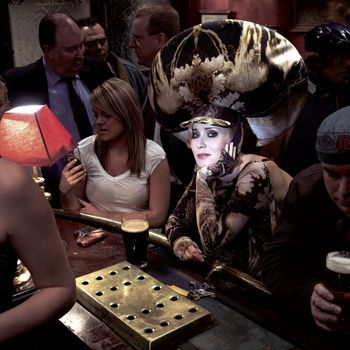 You Know Me BetterYou Know Me Better [EP2] (EP2) · 2008You Know Me Better [EP2] (EP2)4:17
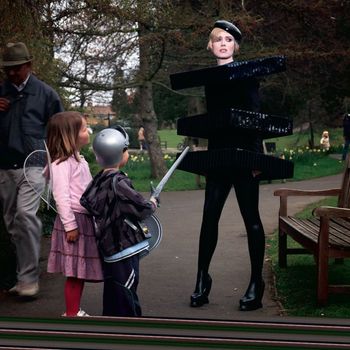 Let Me KnowLet Me Know · 2007Let Me Know5:10
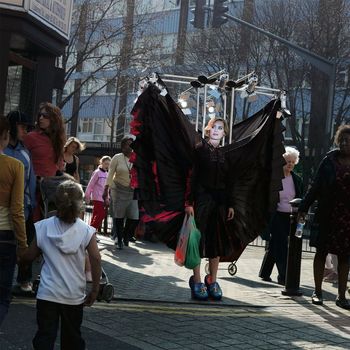 Overpowered (Seamus Haji Remix)Overpowered · 2007Overpowered8:08
 Primitive (Live from London)Live From London · 2008Live From London4:49
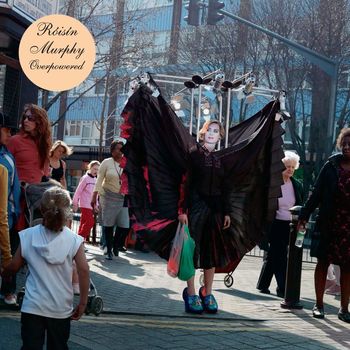 Overpowered (Loose Cannons Mix)Overpowered · 2007Overpowered4:33
 You Know Me Better (Trevor Loveys Vocal)You Know Me Better [EP3] (EP3) · 2008You Know Me Better [EP3] (EP3)7:02