Sérgio Ricardo stands as a cornerstone of Brazilian cultural development across multiple disciplines. His contributions as a musician, composer, filmmaker, and author left a lasting imprint on the nation’s artistic landscape. Piano lessons began for him at age eight through the neighborhood conservatory, after which local performances followed quickly. At seventeen he relocated to São Vicente in São Paulo state and took on assorted duties at Rádio Cultura. A brief engagement as pianist at the Recreinho Prainha nightclub in that same city preceded his 1952 move to Rio, where he joined the staff of Rádio Vera Cruz. When Tom Jobim departed his Posto 5 Copacabana club residency to arrange for Continental, Ricardo filled the slot and formed lasting ties with Jobim, João Gilberto, and Johnny Alf. Constant demand for pianists kept him booked nightly across Rio’s, São Paulo’s, and Santos’s leading venues. He paused formal schooling to gain admission to the Escola Nacional de Música for two years, then pursued harmony and counterpoint privately for two additional years, yet completed neither program. After writing numerous songs he began singing under the name João Lutfi and became one of the era’s most sought-after crooners. In 1957 RGE issued his debut 78 rpm, followed shortly by a second. Maysa encountered one of his originals, tracked him down, and included “Buquê de Isabel” on an early album of hers. While accompanying a vocalist on a TV Tupi broadcast he received an invitation to act in soap operas at the network, by then performing under the name Sérgio Ricardo. He maintained parallel commitments in music at Rio’s Grande Teatro Tupi and on São Paulo’s TV de Vanguarda as well as Rio’s Balada on TV Continental.
From bossa nova’s emergence in 1958 he participated actively and became one of its earliest artists to release an LP in the style, A Bossa Romântica de Sérgio Ricardo on Odeon. Growing social engagement soon prompted “Zelão,” signaling his divergence from the movement. The 1961 short O Menino da Calça Branca placed him within cinema novo, the politicized aesthetic wave that gained worldwide attention. That film earned the Prêmio Governador do Estado da Guanabara in 1963 and the Prêmio Berimbau de Prata at the I Festival de Cinema da Bahia in 1962. The following year Itamarati selected him to represent Brazil at the San Francisco International Film Festival, where the short placed second. On 21 November 1962 he appeared at the landmark Bossa Nova Festival in Carnegie Hall. He remained eight months in New York, securing a producer for O Menino da Calça Branca while performing at clubs such as the Village Vanguard. An engagement on the French Riviera as singer-composer drew him next. In 1963 he set Gláuber Rocha’s lyrics to music for the score of Deus e o Diabo na Terra do Sol, one of Brazilian cinema’s landmark works; the soundtrack appeared on LP that year alongside his own Um Senhor Talento on Elenco. Itamarati again tapped him in 1964 to represent Brazil at festivals in Lebanon and Genoa with Esse Mundo é Meu, which screened in both countries and was cited by Cahiers du Cinéma in June/July 1964 among the year’s notable releases; it also received Best Film at the 1965 Festival de Marília in São Paulo. During the Lebanon event the Lebanese government asked him to direct Taire in Caire. Returning to São Paulo in May he premiered the solo show Esse Mundo é Meu, which introduced singer-composer Toquinho. He further orchestrated the score for Gláuber Rocha’s Terra em Transe and composed music for Joaquim Cardoso’s play O Coronel de Macambira, later issued by Philips as A Grande Música de Sérgio Ricardo. Second place at the Festival Fluminense came with “Romana.” At TV Record’s II FMPB in 1966 he created a notorious moment when, during the finals, he smashed his violão and hurled it toward the crowd, resulting in disqualification; the melody’s complexity had led listeners to favor easier entries such as Chico Buarque’s “A Banda.” His outburst—“Vocês não estão entendendo nada…”—underscored his insistence that lyrics carried the essential message, conveyed through the story of fictional soccer star Beto Bom de Bola, whose triumphs gave way to isolation and poverty, closing with “O mal também tem cura,” a pointed critique of the military regime.
Additional festival appearances included Bienal do Samba with “Luandaluar,” Festival da TV Excelsior de São Paulo with “Girassol,” Festival Internacional da Canção with “Canto do Amor Armado,” which reached the final ten, and IV FMPB, where “Dia da Graça” finished fifth. In January 1968 he mounted another Rio production, Sérgio Ricardo e a Praça do Povo, with Chico de Assis. Between 1968 and 1970 he developed Juliana do amor perdido and scored the 1969 film O Auto da Compadecida, drawn from Ariano Suassuna’s play. Seeking deeper audience engagement he left conventional theaters and toured Brazil’s interior with intimate performances. The resulting LP Arrebentação appeared on the modest Equipe label in 1971, with a second pressing in 1972; the company soon folded, leaving the album a collector’s rarity. His 1973 Continental release featured Caulos’s cover art depicting a bandage across his mouth; “Canto Americano” from that set had earlier taken first prize for lyrics at the 1968 Athens Festival in Greece. In 1974 he completed nearly every aspect of A Noite do Espantalho, which earned Instituto Nacional do Cinema recognition, the Coruja de Ouro for his brother’s cinematography and for the score, plus Best Film, Best Photography, Best Direction, and Best Male Character at the I Festival de Cinema Brasileiro de Belém. The Cinema Academy of Hollywood listed it among the year’s fifteen outstanding films, and it screened at Cannes and New York. Capitalizing on the acclaim he toured, performing the soundtrack songs live, screening the film, and discussing it with viewers. In 1975 he co-established SOMBRÁS to advocate for musicians’ rights before collecting societies. Aluísio de Oliveira invited him in 1976 to record for RCA’s Música Popular Brasileira Espetacular series and produced Participação; shortly afterward he took the show Ponto de Partida across university circuits. Marcus Pereira released an album by him in 1977. He performed at Cuba’s Festival de Varadero in 1980 and recorded an LP with Geraldo Vandré. For Carlos Drummond de Andrade’s Estória de João-Joana in 1983 he supplied music and arrangements that the Orquestra Sinfônica do Teatro Municipal do Rio de Janeiro recorded. The 1991 memoir Quem Quebrou meu Violão appeared from Record in Rio de Janeiro, and São Paulo’s Museu da Imagem e do Som dedicated a week to his work. A live album was taped in Lisbon in 1994. His score for O Lado Certo da Vida Errada received the Prêmio Candango at the Festival de Brasília, and he composed for the series Zumbi dos Palmares as well as the 1997 telenovela Mandacaru.
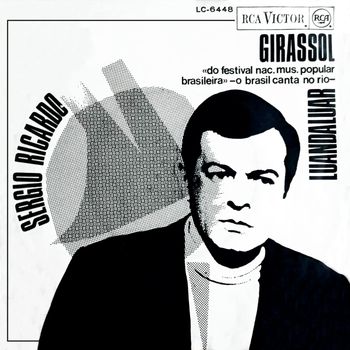

 Dulce NegraSergio Ricardo · 2023Sergio Ricardo3:49
 Seremos UmSeremos Um · 2018Seremos Um5:51