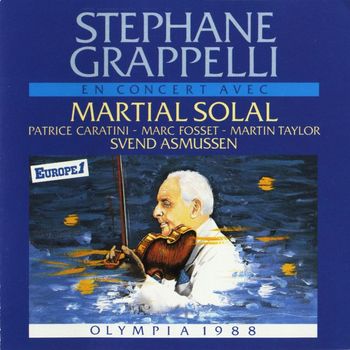
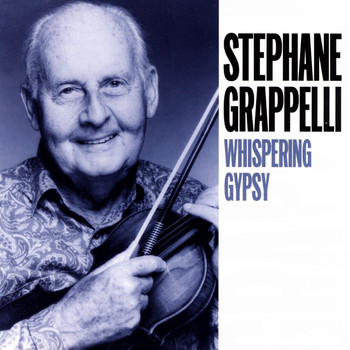
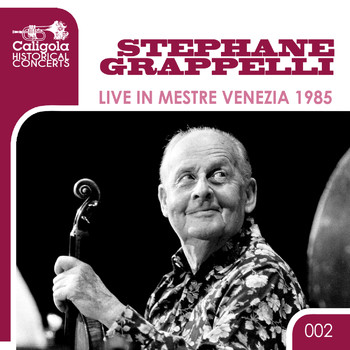
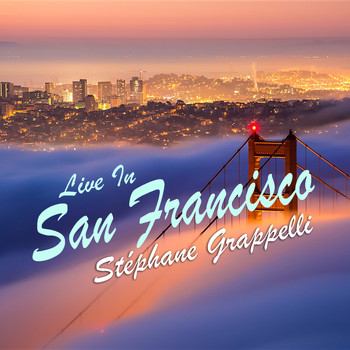
Stéphane Grappelli stands among the foremost jazz violinists in history, placed alongside Joe Venuti and Stuff Smith as one of the three leading figures from the pre-bop era. Through a long career and unfailingly spirited performances, he played a major role in establishing the violin as a viable jazz voice. Although he began as a self-taught player on both violin and piano, he later attended the Paris Conservatoire from 1924 to 1928. Early professional work took him into cinema orchestras and dance ensembles until he encountered guitarist Django Reinhardt in 1933. The two musicians connected immediately on a musical level, even though Grappelli’s urbane outlook contrasted sharply with Reinhardt’s gypsy background. From 1933 to 1939 they led the Quintet of the Hot Club of France, a lineup of violin, three acoustic guitars, and bass that generated a landmark series of recordings and concerts. While the group was performing in London in 1939, the outbreak of World War II prompted Reinhardt to return hastily to France; Grappelli remained in England, bringing the ensemble to an end. He soon formed a new band with pianist George Shearing that maintained steady activity throughout the war years. The first of several reunions with Reinhardt occurred in 1946, yet the pair never resumed regular collaboration despite additional recording projects. Throughout the 1950s and 1960s Grappelli appeared in European clubs, gaining only limited recognition in the United States aside from sessions with Duke Ellington on Violin Summit and with Joe Venuti. Regular international touring began in the early 1970s, after which he became a perpetual traveler and frequent poll winner. He stayed receptive to new ideas while preserving his swing approach, collaborating on record with David Grisman, Earl Hines, Bill Coleman, Larry Coryell, Oscar Peterson, Jean Luc Ponty, and McCoy Tyner, among many others. He continued performing until shortly before his death, remaining at the height of his powers even at age 89 despite increasing frailty. His earliest recordings are compiled on Classics CDs, and he maintained an active recording schedule across his final three decades.