Born on 19 January 1933 in St. Eustace near Montreal, Quebec, Phillips grew up bilingual amid the area’s strong French influence and later cut records in both German and Afrikaans. Although Gene Autry’s singing shaped his style, his first public performances took place in a Montreal church choir. During his early teens his father, a railroad architect, moved the household temporarily to Calgary; when the rest of the family returned to Montreal, Phillips chose to remain and has since frequently cited Calgary as his hometown. After learning guitar and holding a series of odd jobs, he joined CFRN Edmonton as newsreader, handyman and engineer. When a scheduled disc jockey failed to appear, Phillips took the microphone without permission and performed several of his own songs; the resulting reprimand nevertheless produced the morning program Stu For Breakfast that started his broadcasting career. Recognizing the scarcity of Canadian material, he began composing songs drawn from books on Canadian folklore. By 1956, after stints at CJIB Vernon, British Columbia and CHED Edmonton, he was hosting live television shows on Calgary’s newly launched CHCT-TV. CBC regional director Don Cameron soon offered him a radio series as the Travelling Balladeer, featuring folk and children’s songs; the program’s success led to the weekly network television series The Outrider and to Phillips’s involvement with the Calgary Stampede, where he hosted the prime-time CBC broadcast Red River Jamboree.
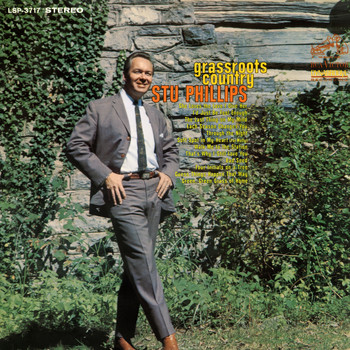
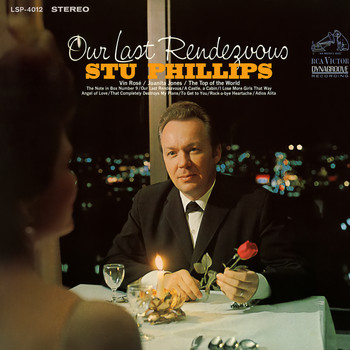
His first discs appeared on Rodeo Records in Halifax; subsequent releases came from London Records and Columbia Records (Canada), yielding modest success with the single “Squaws Along The Yukon.” Despite Canadian fame, Phillips hoped to follow fellow countryman Hank Snow onto the Grand Ole Opry roster. A visit to Nashville in the early 1960s resulted in Chet Atkins signing him to RCA Records, and Phillips relocated there permanently in 1965. He hosted his own morning show on WSIX-TV backed by musicians Jimmy Capps, Jerry Reed and Henri Strzelecki. Billboard chart entries arrived in 1966 with “Bracero” and “The Great El Tigre.” After a 1967 British tour he returned to learn he had been added to the Opry cast. Between 1967 and 1968 he placed six additional singles on the charts, the strongest being “Juanita Jones” at number 13 and “Vin Rose” at number 21. Following “Bring Love Back Into Our World,” which reached number 68, he departed RCA for Capitol Records yet issued no further singles and registered no additional chart entries.
Throughout the 1970s Phillips toured extensively and hosted the Kentucky-based television series Music Place on WAVE-TV. In the early 1980s he began training for the Episcopalian ministry, sharply curtailing live appearances while still performing at major events such as the Calgary Stampede and London’s Wembley Festival. During the 1990s he continued to reside in Nashville, balancing church responsibilities with regular Opry appearances that sustained his popularity. Additional recordings appeared on Broadland, and in 1994 Bear Family Records released a 35-track compact disc that reissued, minus one track, three early Rodeo albums containing the Canadian folklore songs Phillips had written at the outset of his career.