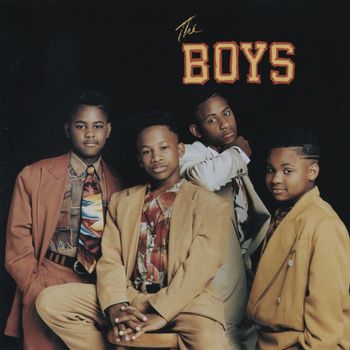
During his time at MCA Records, Jheryl Busby brought the Abdulsamad Brothers, performing as the Boys, onto the roster. After Berry Gordy stepped down and MCA acquired Motown, Busby shifted over to Hitsville USA, taking the siblings with him in the process. His aim was Jackson Five–level success, though New Edition–style numbers would have sufficed; the raw ability existed, yet Motown soon found shaping the group an ongoing challenge.
Born November 8, 1973, Khiry; December 10, 1976, Tajh; March 27, 1975, Hakim; and April 17, 1978, Bilal Abdulsamad began performing together in Carson, California, once Bilal reached age five and Khiry turned nine. Khiry and Hakim started first, with Tajh and Bilal later joining their public appearances for tips. Recognizing their children’s evident promise and innate gift, parents Jabari and Angela Abdulsamad urged them forward with the words “This is America, you can be anything you want.”
Public performances began when the family lacked funds for a Father’s Day gift for Jabari. Angela proposed singing at Venice Beach, California, where they collected more than fifty dollars in a few hours. Jabari then took them there every weekend throughout summer 1984, staging eight shows each Saturday and Sunday and netting twelve thousand dollars—enough to cover school clothes and supplies. The next summer yielded twenty-two thousand dollars. Performances were restricted to summer breaks, as Jabari and Angela prioritized raising productive adults; Jabari, who had majored in early childhood education, applied that training at home while working as an ironworker and running a carpet-cleaning business.
In summer 1986 the brothers announced they no longer wished to sing at the beach and instead wanted to make records. Jabari and Angela, unfamiliar with the industry, followed the advice Richard Pryor once offered and enrolled in a four-week Entertaining Management course at Los Angeles Trade Tech. Jabari later described the instruction as invaluable for revealing everything they had not previously known.
Leaving Venice Beach behind, they entered local talent shows and the private-party circuit under the name Boys Party Time Affair. A Beverly Hills agency booked them at birthday parties for affluent children, including Rod Stewart’s son. Their growing reputation made them one of Southern California’s hottest draws amid a region filled with exceptional vocal and dance talent.
Jabari submitted a self-produced demo to MCA, Motown, and Solar Records. All three expressed interest, yet the family selected MCA, arriving at Motown after Berry Gordy’s retirement and Busby’s appointment as head. The Boys became Busby’s key prospect: they delivered electrifying live shows, wrote their own material, and became Motown’s youngest producers.
Messages From the Boys was nearly finished when, through mutual acquaintance Greg Scelsa, the brothers connected with Babyface, who had moved to Los Angeles in 1985 following hits with the Deele. After the Boys performed at Scelsa events where Babyface was present, Babyface and L.A. Reid created “Lucky Charm,” “A Little Romance,” and “Dial My Heart” for them. Initial reservations faded once Babyface presented the songs live at the family home.
“Dial My Heart” reached number one on the R&B chart in winter 1988, “Lucky Charm” repeated the feat on April 1, 1989, and each held the top spot for one week. “Crazy,” written by Khiry, Hakim, and Ashley Feazell, became their third R&B number-one single in fall 1990 and their final major release. Pepsi featured the track in a commercial, and Jabari launched a 900-number service charging $2.50 per minute for conversations with the brothers; he retained all ancillary rights, having learned from the management course to safeguard merchandising and similar assets. Motown sought to appoint an outside manager, citing Jabari and Angela’s lack of experience, but the parents retained control.
Once the original contract expired in 1993, Motown offered a new six-year agreement that included a label imprint, HAK Records. The brothers accepted, then chose to depart. Motown declined two acts they produced, Small Change and another group, and treated their self-produced Saga Continues… with indifference, prompting them to exit the arrangement after four albums, several hit singles, and nearly eight years of touring.
Andre Harrell succeeded Busby as Motown president shortly after Polygram purchased the company; whether the Boys’ situation contributed remains open to question. Despite three R&B number-one hits, they never secured a pop number-one single comparable to those achieved by the Jackson Five or the Supremes. Although the new deal carried a substantial advance, the group left anyway. Had Babyface and L.A. Reid continued producing them, the trajectory might have differed, yet the brothers hold no regrets and Jabari supported their choice.
Outside industry circles, their disappearance went unexplained; most assumed Motown had dropped them, when in fact they had left the label. All the new artists Busby signed enjoyed strong talent yet brief careers. The Boys had headlined a well-received late-’80s/early-’90s tour spotlighting Rich Nice, MC Trouble, Milira, the Good Girls, and Today—none of whom sustained recording success. MC Trouble passed away, and the others faded from view.
The Boys remained the most gifted act on those bills, captivating audiences with precise choreography, fluid back flips, and energetic vocals. Though not rappers, their explosive stage presence kept crowds standing, much like skilled rap performers. They earned a standing ovation at the Image Awards, appeared in Michael Jackson’s Moonwalk video, recorded with Earth, Wind & Fire, and starred in their own television series before concluding eight years of touring.
Inspired by Alex Haley’s Roots, they relocated to Gambia on Africa’s west coast, having previously toured the continent and absorbed creative energy there. All four initially settled in Gambia, yet only Hakim and Bilal maintain permanent residence while holding dual U.S. and Gambian citizenship. Together with Tajh, who continues recording alongside them, they produce techno, world, and African music as Suns of Light, releasing at least four albums and additional projects regularly. Distributing directly through an MP3 site, they sell their work independently. Locals refer to them as the “crazy boys,” and their former polished image has given way to an appearance indistinguishable from native Gambians.
Khiry resides in Los Angeles, working in film and video production. Tajh lives in the Atlanta, Georgia, area near his parents and handles merchandising. The family invested collectively in real estate, owning Grand Oak Villas, a retirement community in Pensacola, Florida. Hakim and Bilal run two recording studios in Gambia, producing their own material and that of local artists.