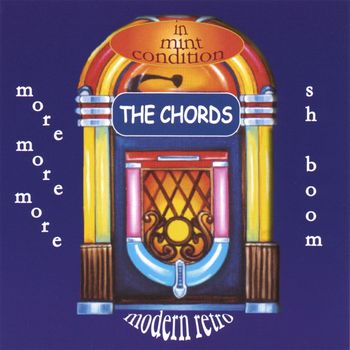
The Chords came together in the Bronx during 1951, with Carl and Claude Feaster handling lead and baritone duties, Jimmy Keyes on first tenor, Floyd "Buddy" McRae on second tenor, and Ricky Edwards supplying the bass. Three years passed before their subway-station performance caught the ear of Atlantic Records scouts, who promptly signed the quintet.
Atlantic's leading A&R executive, Jerry Wexler, assigned the group to record a version of Patti Page's hit "Cross Over the Bridge," a song also tackled by the Flamingos on Chance; the flip side, however, proved far more consequential. That track, "Sh-Boom," delivered an exuberant R&B vocal arrangement whose opening syllables ("shh-boom, shh-boom, yadda da da yadda da da da da da") quickly lodged in listeners' minds.
The title is said to reference the ever-present specter of atomic detonation amid 1954 Cold War tensions, yet the lyrics balanced that anxiety with the buoyant assertion that "life could be a dream." By late June the single had surged onto both national charts, reaching number five on the R&B list and number two on the pop side—an achievement rare for the period. Together with the Crows' 1953 B-side success "Gee," the record effectively brought Black R&B to white listeners on a broad scale for the first time.
Not every observer welcomed the development. On his popular television program Juke Box Jury, host Peter Potter expressed dismay at the emerging style and dismissed "Sh-Boom" by wondering whether anyone would recall the eccentric number after five years, let alone twenty, or whether any label would bother reissuing it. Both predictions proved incorrect.
Publishing firms soon besieged the songwriters with offers to acquire "Sh-Boom," and the group quickly placed the rights with Hill & Range. Competing renditions began airing nationwide alongside the original; among them were a country-styled Coral release by the Billy Williams Quartet and, most prominently, the Crew Cuts' Mercury recording.
Television bookings followed, but the Chords' momentum was disrupted upon learning that another act already used the same name, forcing a change to the Chordcats. Atlantic's promotional material continued to stress that this group had originated "Sh-Boom," even after the Canadian Crew Cuts' lighter pop treatment displaced the R&B original from the charts.
The label subsequently shifted the act to its fledgling Cat Records subsidiary, where further singles largely failed to register. In mid-1955 the members attempted a revival by billing themselves as the Sh-Booms. Lineup adjustments occurred throughout the later 1950s, accompanied by a few undistinguished Vik sides; a final 1960 session for Atlantic preceded their gradual disappearance from the scene.